

Introduction
Much of what is commonly called Western civilisation stands, in large part, on two civilisational legs, one in Athens and one in Jerusalem. One gave it philosophy, reason, conceptual distinction, and the disciplined pursuit of thought. The other gave it archetype, sacrifice, moral drama, and some of its deepest images of innocence, suffering, betrayal, and redemption. Without either, the body would not stand as it has traditionally understood itself. Whatever disputes remain over history, doctrine, textual validity, or theology, there are certain stories whose force exceeds belief. They survive not merely because people accept them as true, but because they reveal patterns that keep recurring in human life.
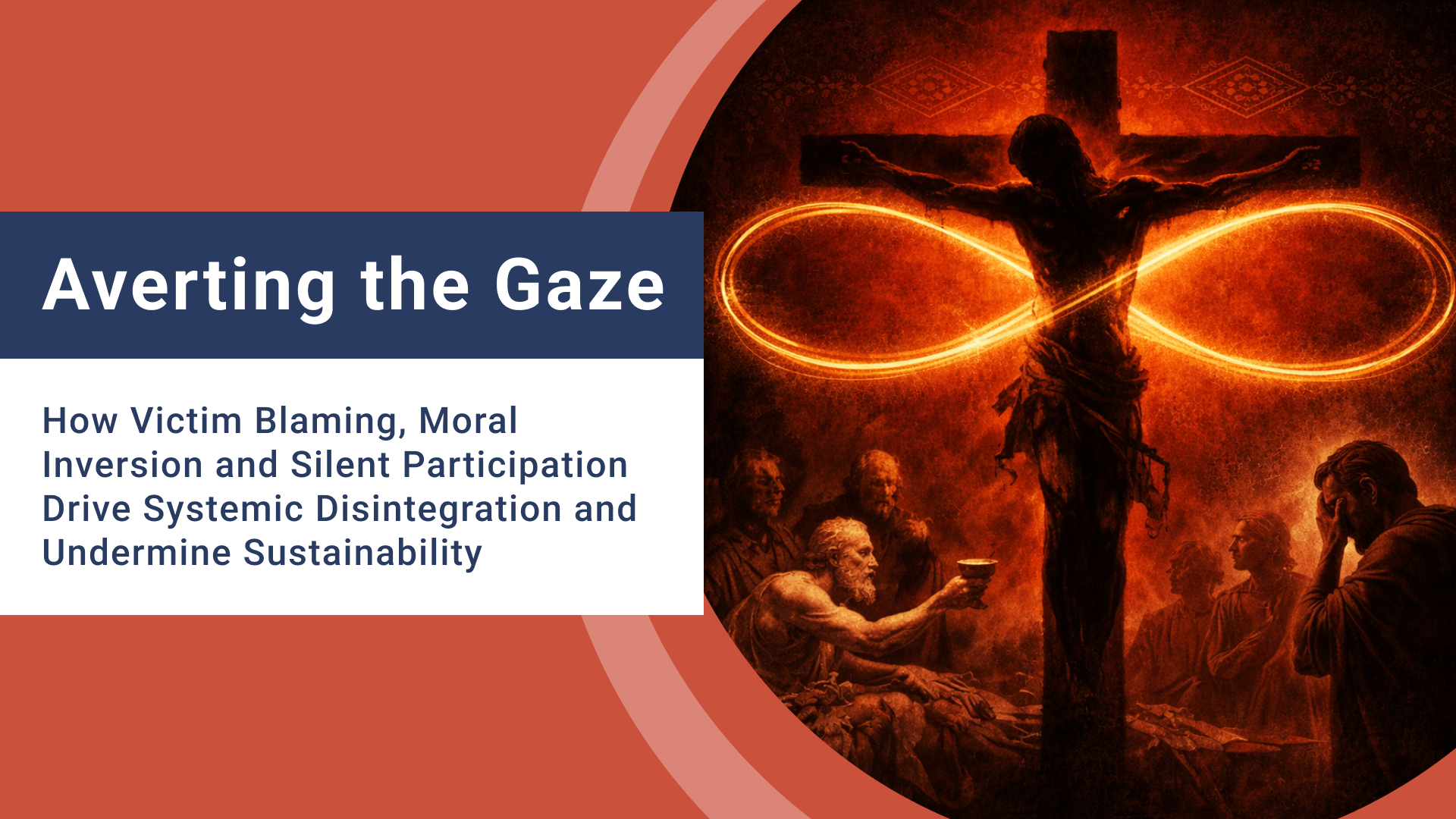
Among these stands the image of the crucifixion, not here as an article of faith, not as a sectarian claim, and not as a demand that anyone believe in one version of history over another, but as an archetype that still illuminates the structure of public innocence under abusive power. Yet this is not where the pattern begins. Before Jerusalem, there was Athens. Before the cross, there was the hemlock.
Socrates was not executed for rebellion, nor for violence, nor for seeking power. His offence was of a different kind. He questioned. He examined. He insisted that truth and rightfulness should be taken seriously, not as slogans, but as matters worthy of inquiry. He did not claim possession of truth. He embodied a commitment to pursue it. That alone was sufficient to become a problem within a system that preferred stability over interrogation. Through a process that carried the appearance of legitimacy, even the language of democracy, he was sentenced to death and made to drink poison.
What is striking is not only that this happened, but how it happened. It was not carried out in secrecy. It was not the act of a hidden force. It unfolded within a system that considered itself ordered, reasoned, and justified. The man whose life was devoted to questioning, to examining, to bringing clarity to what is assumed, was removed not because he destroyed the system, but because he illuminated it.
In his final moments, Socrates turns to his companion and says, “Crito, we owe a rooster to Asclepius.” The statement appears almost out of place. A man sentenced to death, moments away from drinking poison, speaks not of fear, not of regret, but of a debt that must still be honoured. To understand this, one must recognise what Asclepius represented. He was the god of healing. In ancient practice, offering a rooster to Asclepius was an expression of gratitude for recovery from illness. For Socrates to say this at the threshold of death is not incidental. It suggests that he did not experience death as defeat, but as a form of release. As though life, in its unexamined or distorted form, was itself the illness, and death, in this context, was a kind of healing.
This is not a statement of despair. It is a statement of clarity. Even at the point of execution, he remains oriented toward what is rightfully owed. He does not bend. He does not plead. He does not abandon his position. He does not allow the condition imposed upon him to distort his relationship with truth. The rooster, in this sense, becomes more than a ritual offering. It becomes a symbol of awakening. It signals that something has been seen, that something has been understood, and that even in the face of death, that understanding is not relinquished. It is carried through.
This is the first leg. Athens. The philosopher who, in seeking truth, becomes a disturbance. The system that, in preserving itself, removes the one who questions it. The crowd that allows the process to unfold within the bounds of what it considers acceptable.
Then comes Jerusalem. The archetype intensifies. The philosopher becomes the innocent. The questioning becomes a challenge to power at a different scale. The removal becomes more visible, more brutal, more exposed. The crucifixion is not merely an act of violence. It is an event carried out in the presence of many, under conditions where the suffering is undeniable, where the asymmetry of power is visible, and where the response of those who witness it becomes part of the event itself.
What makes these archetypes enduring is not only the acts themselves, but the atmosphere around them. In both cases, there is enough visibility for recognition to be possible. In both cases, there is a figure who stands in relation to truth, not as possession, but as orientation. In both cases, there is a system that responds by removing that figure. And in both cases, there is a surrounding field of participation that does not fully interrupt what is happening.
The philosopher who asks questions. The innocent who stands exposed. The system that acts. The crowd that witnesses. The gaze that turns away, or does not fully hold. These are not isolated elements. They form a pattern.
What has endured across generations is not merely the drama of what was done to them. It is not the spectacle of suffering that is being carried forward. It is something else. It is the fact that, within that suffering, they did not bend the knee. They did not descend to the level of what was imposed upon them. They did not allow the violence, the pressure, or the demand for conformity to alter their core. The one on the cross did not become what was done to him. The philosopher, fully capable of defending himself, of apologising, of negotiating his way out, did not do so. He chose not to abandon the very orientation toward truth that brought him to that point. We may blame the victim. We may martyr them. We may reinterpret them in ways that suit our narratives. But we cannot remove their impact. Thousands of years later, they remain present, not because they suffered, but because they held. Because they did not yield their Being to the conditions imposed upon them. That is what persists.
This is where the article begins. Not with religion, not with doctrine, not with allegiance to any particular narrative, but with a civilisational mirror. There are moments in history and in life where injustice is not hidden. It may be narrated differently, rationalised, or reframed, but it is not truly concealed. There is violence. There is asymmetry. There is humiliation. There is abusive power. There is a victim or a figure exposed to forces far larger than themselves. And yet what follows is not the clarity one might expect. Instead, language hesitates. Responsibility disperses. Attention shifts. The aggressor is not fully named. The victim is examined. The gaze turns away.
This is not a political observation alone. It is a human one. It reveals something about how systems operate, how individuals participate, and how patterns of disintegration take shape long before they become visible as crisis.
That is why this article matters for the Authentic Sustainability Discourse. If sustainability is reduced to environment, ecology, or the conventional language through which it is often discussed, the depth of the issue is missed entirely. Systems do not collapse only because of external conditions. They also collapse because of what they tolerate, what they normalise, what they neglect, and what they fail to confront while it is still early enough to do so. They collapse when shadows remain unexamined, when distortions are allowed to stabilise, when misconceptions harden, and when neglect becomes part of participation.
The purpose here is not to assign blame, nor to revisit history as history. It is to recognise the pattern as it continues to appear. It is to create the possibility of seeing, not only what is happening, but how it is being held. It is to move from observation to recognition, from recognition to engagement, and from engagement to the development of capacity.
There is, however, something else that must be said, even within this weight. These archetypes, while severe, do not exist only to describe collapse. They also point to something else. That the pursuit of truth, the insistence on rightfulness, the refusal to conform to distortion, continues to emerge, even in environments that resist it. That clarity does not disappear simply because it is challenged. That which is illuminated, even briefly, leaves a trace that can be recognised again.
The rooster is still owed. And the day, however delayed, still arrives.
Before moving further, it is worth pausing to acknowledge the path this article takes. What has been opened here is not yet the framework, but the ground upon which the framework becomes necessary. The time spent with these archetypes, with these scenes, and with these patterns is deliberate. Without this depth of context, the language that follows can be misunderstood, reduced, or prematurely applied. What is being described requires more than quick recognition. It requires a shift in how we see before it can inform how we act. For that reason, this article will remain with the phenomenon for a while longer before introducing the Authentic Sustainability Framework more explicitly. That patience is not incidental. It is part of the work.
The Silence Around the Crucifixion
If the crucifixion is approached as an archetype rather than a theological claim, something uncomfortable comes into view. The event is not only about violence. It is about the atmosphere in which that violence unfolds. A man is publicly captured, humiliated, beaten, and slowly executed. The act is not hidden. It is not obscure. It is not happening in some remote corner where no one can see. It is exposed, visible and undeniable. And yet the response is not what one might expect from a world that recognises innocence and condemns abuse with clarity.
What is striking is not only what was done, but what was not done. There is no overwhelming, unified condemnation proportionate to the act itself. There is no immediate, collective refusal to participate in or tolerate what is unfolding. There is no full interruption of the violence by those who can see it. Instead, there is hesitation. There is fragmentation. There is distance. There is the quiet and often unconscious turning away of the gaze. People pass by. Some watch. Some mock. Some rationalise. Some simply continue with their day. The system continues to function around the act, as though the act itself is not sufficient to disrupt it entirely.
This absence matters more than it first appears. It reveals a pattern in which the presence of injustice does not automatically produce clarity. Even when something is visible, even when something is known at some level, the collective response can remain incomplete. Language softens. Responsibility disperses. Attention shifts. The centre of gravity moves away from the act of violence itself and begins to orbit around other considerations. Who is this person really? What did he do? Why did this happen? Could it have been avoided? Should he have acted differently? Should he have fitted in? Should he have remained silent? Should he not have challenged power in the way that he did?
This is where victim blaming begins to take shape, not as a crude accusation, but as a subtle reallocation of focus. The question is no longer directed primarily at the force that is inflicting harm. It is redirected toward the one who is suffering it. The victim becomes the object of scrutiny. Their behaviour is examined. Their choices are questioned. Their character is analysed. Their perceived deviation from what is acceptable, tolerable, or strategically wise becomes a point of discussion. In doing so, the original act of violence is no longer held in its full weight. It is diluted. It is contextualised in ways that reduce its moral clarity. It is not denied outright, but it is not condemned fully either.
This pattern has not remained confined to that archetype. It has repeated itself across time, across cultures, and across systems. The form changes. The language evolves. The actors differ. But the structure persists. There is an event or condition in which harm is inflicted through a clear asymmetry of power. There is visibility. There is enough awareness for recognition to be possible. And yet the response becomes fractured. The aggressor is not named with precision. The force behind the harm is not condemned in proportion to its impact. Instead, the narrative begins to bend. Attention shifts toward the victim. The victim is not only left to endure the harm but also to carry the burden of explanation, justification, and sometimes even blame.
In many cases, this is not done consciously. It is not always the result of explicit malice. It emerges from a combination of discomfort, fear, alignment, self-interest, and the desire to avoid the consequences of confronting power directly. To name something fully is to take a position. To take a position is to incur a cost. And so, rather than confronting the force that is clearly at play, the system finds ways to maintain a degree of distance. It maintains the appearance of engagement while avoiding the depth of it. It speaks, but does not say. It acknowledges, but does not fully recognise. It observes, but does not truly see.
This is where the crucifixion, understood as an archetype, becomes a mirror. It is not asking whether one believes in a particular version of history. It is asking whether one can recognise the pattern when it appears again. It is asking whether the same structure that allowed visible injustice to proceed without full condemnation is still present in the way we respond to harm today. It is asking whether we, too, pass by, aware enough to know that something is wrong, but not willing to hold the full weight of what is happening. It is asking whether, in the presence of asymmetry, suffering, and visible harm, we find ourselves shifting our attention toward the victim rather than the force that produces the harm.
This is not a distant question. It is immediate. It is present in the way narratives are formed, in the way language is used, in the way attention is directed, and in the way responsibility is distributed. It is present in the difference between recognising an act and condemning it fully. It is present in the gap between seeing and seeing through. And it is precisely within that gap that the early movements of disintegration begin to take shape, often quietly, often subtly, but with consequences that compound over time.
The Scene: A Man on the Cross
Imagine the scene, not as belief, not as doctrine, but as a human situation stripped to its essence. A man stands exposed to a force far greater than himself. He is captured, restrained, and placed in a position from which there is no escape. He is nailed, held in place, his body becoming the site upon which power is exercised. Time slows. The sun rises and moves. Heat builds. Dehydration begins. Blood drains gradually. Breath becomes labour. Life does not end suddenly. It fades, moment by moment, under conditions that are fully visible to those around him.
This is not hidden violence. It is not happening in secrecy. It is unfolding in public. People pass by. Some look. Some turn away. Some speak. Some remain silent. Some know enough to sense that something is not right. Some feel the discomfort but cannot locate it clearly. Some justify. Some dismiss. Some reduce the event to a detail in a larger narrative that allows them to continue as they were. The scene is not only about what is being done to him. It is about what is happening around him, in the presence of what is being done.
There is a question embedded in this scene that is rarely asked directly. What would have been required of him to avoid this fate? The answers that emerge are telling. He should have fitted in. He should have adapted himself to the dominant order. He should have shaped his words more carefully. He should have softened his position. He should not have challenged the structures that demanded conformity. He should have performed acceptance. He should have learned the language of survival within the system rather than stepping outside of it. He should have been less visible. Less disruptive. Less confronting.
In other words, the responsibility begins to shift. It is no longer located entirely in the force that captures, binds, and executes. It begins to move, subtly at first, toward the one who is suffering. The narrative forms around him. He becomes, in part, responsible for what is being done to him. Not fully, not explicitly, but enough to dilute the clarity of the act itself. Enough to create space for hesitation. Enough to allow the system to continue without fully confronting what it is doing.
This is where the language of superiority enters. The idea that some stand above others. That some are entitled to determine the order of things. That some can define what is acceptable, what is tolerable, what is permitted, and what must be removed. It is the posture of those who perceive themselves as the better ones, the chosen ones, those who stand closer to the centre of authority. It is the posture of those who begin to behave as though they are the measure of reality itself, rather than participants within it. In older language, one might call them pharaohs. In modern language, the form changes, but the posture remains. It is the belief that existence should bend to one’s will, that others should align, that deviation is not merely disagreement but a problem to be corrected.
At the root of this posture is a radical form of human centrality. The idea that the human being, or a group of human beings, stands as the centre of existence. That there are no axiomatic structures above them to which they are accountable. That power justifies itself. That capability grants legitimacy. That what can be done can therefore be done. When this posture takes hold, the threshold for what is acceptable shifts. Actions that would otherwise be recognised as violations become normalised. The extraordinary becomes ordinary. The unacceptable becomes manageable. The line moves.
And still, the man remains on the cross. Still, the body weakens. Still, life drains. Still, the sun moves across the sky. Still, people pass by. Still, the system continues to function around him. This is what makes the scene so difficult to confront. It is not only the violence. It is the coexistence of that violence with normality. It is the way in which life continues alongside suffering, without being interrupted by it. It is the way in which the event becomes part of the background rather than the centre of attention.
Now extend the scene. Imagine that while this is happening, others are not only observing but engaging with it as though it were a spectacle. Imagine that the unfolding of harm becomes something that can be discussed, predicted, or even traded upon. Imagine that outcomes, suffering, escalation, and destruction become variables in systems of attention and engagement. That there are those who watch not with concern, but with curiosity, with calculation, even with a form of entertainment. That everything begins to acquire a price. That what is happening to one becomes content, becomes signal, becomes something that can be processed, consumed, and circulated.
At this point, the scene is no longer only about a man on a cross. It is about a system that can hold such a scene without breaking. It is about a collective capacity to witness without fully responding. It is about the conditions under which visible harm does not lead to proportionate clarity. It is about the ways in which responsibility can be displaced, diluted, and redirected. It is about how easily the gaze can turn away, even when what is before it is undeniable.
This is the ground upon which victim-blaming grows. Not always through direct accusation, but through the gradual movement of attention away from the source of harm and toward the one who endures it. Not always through loud statements, but through silence, hesitation, and the refusal to hold the full weight of what is happening. Not always through cruelty, but through distance, comfort, and the desire to remain untouched by the consequences of seeing clearly.
The Psychology of Averting the Gaze
Averting the gaze is rarely announced. It does not arrive as a declaration. It emerges quietly, often in ways that feel reasonable, balanced, even responsible. It is the subtle movement away from what is difficult to confront toward what is easier to manage. It is not always driven by malice. In many cases, it is driven by discomfort, by the desire to preserve stability, by the instinct to avoid cost, by alignment with existing structures, and by the simple wish to continue one’s life without disruption. This is precisely what makes it so powerful. It does not require explicit agreement with injustice. It only requires insufficient confrontation of it.
The moment something becomes visible enough to demand clarity, the system faces a choice. It can name what is happening with precision, or it can soften its language. It can locate responsibility clearly, or it can disperse it. It can confront power directly, or it can redirect attention toward safer ground. In most cases, especially where asymmetry of power is present, the second path becomes more attractive. Language begins to shift. Words such as concern, complexity, context, and restraint take the place of direct recognition. The event is acknowledged, but not fully. The harm is noted, but not held in its full weight. The aggressor is referenced, but not named, with the clarity required to interrupt the pattern.
This is where victim blaming begins to take its more refined forms. It is no longer about accusing the victim directly. It is about asking the wrong questions at the wrong time. It is about placing analytical attention on the behaviour, choices, and identity of the one who is suffering, while the force that produces the suffering remains insufficiently interrogated. It is about creating an environment in which the victim must explain themselves before the violence inflicted upon them is fully recognised. It is about turning the victim into a problem to be understood, rather than holding the problem as the force that has acted upon them.
This redirection is rarely perceived as such. It feels like inquiry. It feels like nuance. It feels like sophistication. Yet its effect is consistent. The centre of gravity shifts. What should remain central becomes peripheral. What should be peripheral becomes central. The system begins to organise itself around a misalignment that is difficult to detect because it is expressed through language that appears reasonable. In this way, moral inversion can occur without the need for overt denial. The event remains visible, but its meaning becomes altered through the way it is framed.
There is also a temporal dimension to this process. Immediate clarity often requires immediacy of response. It requires the willingness to recognise and name what is happening without waiting for perfect information, without hiding behind procedural delay, and without allowing the passage of time to dilute the urgency of the event. Averting the gaze introduces delay. It creates space in which the initial clarity begins to fragment. As time passes, narratives accumulate. Competing interpretations emerge. The original act becomes one element among many. By the time a conclusion is reached, the force of the event has already been reduced. What could have been seen clearly in the moment becomes obscured through accumulation.
The desire to remain unaffected also plays a central role. To see fully is to be implicated. To recognise clearly is to face a question of response. Many prefer to maintain a position in which they can observe without being required to act. Averting the gaze allows for this. It creates a distance between the observer and the event. It allows one to remain intact, undisturbed, uncommitted. This is often justified through the language of overwhelm. There is too much happening. The situation is too complex. The information is too incomplete. These statements can be true at one level, but they also function as mechanisms of withdrawal. They provide a way to step back without acknowledging the step.
At a deeper level, averting the gaze is connected to self-concern. When the primary reference point becomes one’s own immediate comfort, security, or alignment, anything that threatens that position is filtered accordingly. Confronting power carries risk. Naming asymmetry carries consequence. Standing in clarity may require stepping outside of accepted boundaries. For many, this cost is too high. The system, therefore, adapts. It develops ways to remain engaged without being exposed. It creates narratives that allow participation without confrontation. It sustains itself by maintaining a balance between awareness and avoidance.
This is how a system can remain functional while moving toward disintegration. The signs are present. The shadows are visible. The distortions are detectable. Yet they are not fully addressed. They are managed, reframed, distributed, and postponed. The result is not immediate collapse. It is gradual misalignment. The gap between reality and its representation widens. The difference between what is happening and what is being said increases. Over time, this gap becomes a structural feature of the system itself.
The archetype returns here not as history, but as recognition. The man on the cross is not only a figure in a distant past. He is a representation of what happens when visible harm meets insufficient clarity. The crowd that passes by is not only a crowd from another time. It is a pattern of participation that continues to appear wherever the gaze turns away. The question is not whether such moments exist. The question is how we respond when they do, whether we allow language to drift, whether we shift our attention toward the victim, and whether we maintain a distance that protects us at the cost of seeing fully.
Moral Inversion in Real Time
There are moments in which the structure becomes unmistakable. Harm is inflicted through a clear asymmetry of power. Lives are disrupted, damaged, and lost. The scale of force is visible. The direction of that force is visible. The consequences are visible. And yet, the language that emerges around it does not reflect that clarity. It bends. It reframes. It redistributes emphasis. It introduces hesitation where directness is required. This is the moment in which moral inversion begins to take shape, not as an abstract idea, but as a lived condition.
In such moments, the expectation would be straightforward. Where there is visible aggression, there would be proportionate condemnation. Where there is harm inflicted, there would be clear recognition of the source of that harm. Where a system or a people are subjected to force, there would be acknowledgement of their right to defend, to respond, to protect what remains of their lives, their dignity, and their continuity. Yet what often emerges is something else entirely. The aggressor is not named fully. The force behind the harm is described in qualified terms. The language remains careful, measured, and incomplete. At the same time, the victim is not only observed but examined. Their response becomes the subject of scrutiny. Their actions are analysed, criticised, and often condemned with a clarity that was not applied to the force that initiated the condition.
This inversion does not need to be total to be effective. It does not require that the victim be declared guilty in explicit terms. It only requires that the centre of attention shift. Once attention moves away from the origin of harm and toward the behaviour of the one enduring it, the moral landscape begins to change. The initial act of violence becomes one element among many. It is placed within a field of considerations that dilute its force. Context is introduced selectively. Complexity is invoked asymmetrically. The narrative becomes layered in ways that obscure rather than illuminate. By the time the situation is fully discussed, the clarity that was available at the outset has already been compromised.
What makes this particularly difficult to confront is that it often presents itself as balance. It appears as an attempt to see all sides, to avoid oversimplification, to remain fair. Yet fairness that does not recognise asymmetry becomes distortion. Balance that treats unequal forces as equivalent produces misrepresentation. When a situation involves a clear disparity of power, capability, and impact, language that equalises responsibility without acknowledging that disparity does not create neutrality. It creates confusion. It shifts the burden of explanation toward those who are already carrying the burden of harm.
There is also a deeper layer to this inversion, one that operates beneath language. It is the reluctance to legitimise the position of the victim. To acknowledge that a victim has the right to defend, to resist, or even to exist within the condition imposed upon them is to cross a line. It is to take a position that carries implication. Many avoid this. They may recognise the harm. They may express concern. They may call for restraint. But they stop short of affirming the legitimacy of the victim’s position. This absence is not neutral. It leaves a vacuum in which the victim remains unanchored, observed but not fully recognised, visible but not fully legitimised.
This is where the pattern aligns again with the archetype. The man on the cross is visible. The suffering is visible. The injustice is visible. Yet full condemnation does not arrive. Instead, the narrative fragments. Attention disperses. Responsibility blurs. The victim stands at the centre of the event, yet is not held as the centre of the moral response. The system continues to operate around him, not because the event is unclear, but because the cost of clarity is too high.
In real time, this produces a condition that is difficult to articulate but easy to feel. There is a sense that something is not being said fully. There is an awareness that the language does not match the reality. There is a recognition that the focus is misplaced, that the questions being asked do not align with the situation as it is. Yet without a framework to understand this, it remains a feeling rather than a diagnosis. It can be dismissed as bias, as emotion, or as incomplete information. The deeper pattern remains unexamined.
This is precisely where the Authentic Sustainability Discourse becomes necessary. It provides a way to move beyond surface interpretation and into structural recognition. Moral inversion is not simply a failure of ethics. It is a signal of misalignment within the system. It indicates that shadows are present, that distortions are active, that attention is being redirected away from what needs to be confronted. It shows that the system is already moving along a trajectory that, if left unaddressed, leads toward conditions of greater strain, greater difficulty, and greater instability.
The question is not whether such moments occur. They do. The question is whether they are recognised as they are unfolding, or whether they are absorbed into the background of normality. When moral inversion becomes normalised, when the victim is consistently scrutinised more than the force that harms them, when the right to defend is treated as conditional while the act of aggression is treated as contextual, the system is not holding its integrity. It is beginning to reorganise itself around a distortion that will not remain contained.
The Spectacle of Suffering
There is a further movement that takes place once moral inversion is tolerated for long enough. What begins as hesitation becomes normalisation. What begins as distance becomes engagement of a different kind. The scene no longer exists only as something to be witnessed. It becomes something to be consumed.
While lives are being lost, while harm is unfolding in real time, while families, communities, and systems are absorbing the impact, another layer forms around it. The event becomes content. It becomes something to follow, to track, to comment on, to analyse in fragments. It becomes something that can be packaged, circulated, repeated, and processed through systems of attention that are themselves detached from the reality of the suffering they represent. The distance between what is happening and how it is experienced by those observing it grows wider.
In this condition, suffering does not always produce sobriety. It can produce stimulation. It can produce engagement that is not grounded in responsibility but in curiosity, in anticipation, and at times in a form of entertainment. The unfolding of harm becomes something that can be watched in increments, discussed in probabilities, and even translated into forms that assign value to outcomes. There are spaces in which destruction is no longer only tragic. It becomes a variable. It becomes something that can be predicted, reacted to, and, in some cases, even wagered upon. Everything begins to acquire a price, not necessarily in a literal sense alone, but in the way it is treated as an exchangeable unit within systems of attention and reaction.
This is not a deviation from the earlier pattern. It is an extension of it. Once the gaze has been averted from the full weight of what is happening, it becomes possible to engage with the event without being anchored in its reality. The distance that was initially created to avoid discomfort now enables a different form of participation. The observer is no longer simply looking away. The observer is now interacting, but interacting in a way that does not require full recognition. The event is present, but its meaning has been diluted enough to allow for engagement without responsibility.
At this point, the question of victim blaming takes on another dimension. It is no longer only about how the victim is spoken about. It is about how the entire situation is held within the system. When suffering becomes part of a spectacle, when it becomes embedded in processes that treat it as information, signal, or opportunity for engagement, the conditions for clarity are further weakened. The victim is not only subjected to harm and to misdirected scrutiny. They are also placed within a system that processes their condition in ways that are detached from its human reality.
This is where the erosion becomes difficult to detect, because it does not appear as a collapse. The system continues to function. Information flows. Communication continues. Engagement remains high. Yet something essential has shifted. The relationship between the observer and the observed has changed. The capacity to hold the full weight of what is happening has diminished. The event is still visible, but it is no longer fully felt. It is still discussed, but it is no longer fully recognised.
The archetype returns again, not in form, but in structure. The man on the cross is no longer only a figure to be pitied or judged. He becomes, in this extended frame, part of a scene that others can engage with from a distance. The crowd does not only pass by. The crowd begins to interact with the scene in ways that do not interrupt it. The suffering continues, but the system around it adapts to include it as part of its ongoing activity.
This is one of the ways in which disintegration progresses. It does not always announce itself through visible breakdown. It can move through subtle shifts in perception, through the gradual normalisation of what should remain confronting, through the incorporation of suffering into systems that no longer respond to it with proportionate clarity. When everything can be processed, when everything can be observed without requiring a response, when everything can be assigned a form of value, the conditions for meaningful recognition weaken.
The issue here is not only that suffering exists. It is that suffering can exist within a system that continues to operate as though it has not crossed a threshold. It is that harm can be integrated into the background of activity without producing the interruption that would otherwise signal that something fundamental has been violated. It is that the distance created by averting the gaze can evolve into a form of engagement that maintains the appearance of awareness while avoiding the depth of it.
In this condition, the responsibility does not disappear. It changes form. It becomes less about what is done directly and more about how one participates within the system that holds the event. It becomes a question of whether one remains a passive observer, an engaged consumer, or something else entirely. It becomes a question of whether one recognises the shift that has taken place and whether one is willing to move against it, not through reaction, but through clarity.
Participation: Active and Passive
At this point, the question can no longer remain external. It is no longer sufficient to observe what is happening, to analyse language, or to critique patterns at a distance. The question turns inward. Not as accusation, but as recognition.
Are we participating?
Participation does not begin with action alone. It begins with orientation. It begins with how we see, what we allow, what we normalise, and what we refuse to confront. There are forms of participation that are visible, deliberate, and direct. There are also forms that are quiet, indirect, and often invisible even to the one participating in them.
Active participation is easier to recognise. It includes those who justify, defend, enable, or directly contribute to the patterns we have been describing. It includes those who shape narratives in ways that obscure clarity. It includes those who amplify distortions, who redirect attention, who reinforce asymmetry, and who knowingly or unknowingly support conditions in which harm continues. In these cases, participation is visible, even if its motivations are complex.
Passive participation is more difficult to detect, and in many ways more pervasive. It is the participation of silence. It is the participation of distance. It is the participation of those who see enough to sense that something is wrong, yet do not move toward it. It is the participation of those who avert their gaze, not through denial, but through withdrawal. It is the participation of those who remain within the system as it is, continuing their roles, their routines, and their engagements, without interrupting the patterns that sustain the condition.
This is where the distinction becomes uncomfortable. Passive participation often feels like neutrality. It feels like restraint. It feels like avoiding unnecessary involvement. Yet in conditions where harm is visible and asymmetry is clear, neutrality does not remain neutral. It becomes a form of alignment with the condition as it is. Not because one intends to support it, but because one does not interrupt it.
This is not a moral accusation. It is a structural observation. Systems are sustained not only by those who actively shape them, but also by those who continue to participate within them without altering their orientation. The absence of interruption is itself a form of continuity. The lack of confrontation allows patterns to stabilise. The refusal to name what is present allows it to remain embedded.
There is also a personal dimension to this. Participation is not only external. It exists within the individual. The same mechanisms that operate at the level of systems operate within the human being. The capacity to avert the gaze, to redirect attention, to avoid discomfort, to remain within familiar patterns, is not only something we observe in others. It is something we experience ourselves. This is where the conversation moves from observation to responsibility, not as obligation imposed from outside, but as recognition of one’s own position within the pattern.
The tendency to remain within one’s immediate concerns plays a central role here. When attention is anchored primarily in what affects us directly, what threatens our immediate comfort, or what aligns with our existing positions, anything that falls outside of that field becomes easier to ignore. The world narrows. The horizon contracts. What does not impact us immediately can be postponed, deprioritised, or set aside. This creates the conditions under which passive participation becomes the default.
It is here that the idea of the luxury of being overwhelmed begins to take shape. Overwhelm becomes a justification for withdrawal. The volume of information, the complexity of events, the intensity of the situation are cited as reasons for stepping back. There is truth in this. The world is complex. The volume is high. The demands on attention are significant. Yet overwhelm can also function as a mechanism that allows the individual to remain within a limited field of engagement. It provides a reason not to look further, not to interrogate deeper, not to move beyond what is immediately manageable.
This is where the connection to the earlier pattern becomes clear. Averting the gaze is not only something that happens at the level of systems. It is something that happens within individuals. It is reproduced through countless small acts of withdrawal, of redirection, of selective attention. Each instance may appear insignificant. Taken together, they form the environment in which larger patterns can continue.
The archetype remains present in this movement. The crowd around the cross is not only a historical image. It is a representation of the ways in which human beings participate in conditions they do not fully endorse. Some act. Some speak. Many pass by. Many observe without interrupting. Many remain within the flow of their own lives, allowing the event to exist alongside them without becoming the centre of their response.
The question, then, is not only what is happening in the world. It is where one stands within it. Whether one is participating actively, passively, or moving toward a different form of engagement. Whether one is contributing to the continuation of the pattern or beginning to disrupt it through clarity, recognition, and the refusal to avert the gaze.
The Luxury of Being able to be ‘Overwhelmed’
There is a moment, often subtle, in which the individual encounters the scale of what is happening and steps back. The reasons appear valid. There is too much information. There are too many perspectives. The situation is complex, layered, and difficult to resolve. The emotional weight is high. The demands on attention are already significant. From within this experience, the decision to withdraw can feel not only understandable but necessary.
This is where a particular form of justification emerges. We give ourselves the luxury of being overwhelmed. We allow overwhelm to become a reason not to engage further, not to look more closely, not to interrogate what is present. It provides a language through which withdrawal can be framed as self-protection rather than avoidance. It allows the individual to remain within a narrower field of attention while maintaining a sense of awareness.
There is truth within this. Human capacity is not unlimited. No individual can carry the full weight of everything that is happening at once. Attention must be directed. Energy must be managed. There are limits. Yet the issue here is not the existence of limits. It is how those limits are used. When overwhelm becomes the default response to anything that exceeds immediate comfort, it begins to function not as a boundary, but as a barrier.
The consequence of this barrier is not immediate. It unfolds over time. The subtle pains, the small misalignments, the early signals of distortion are left unattended. They do not disappear. They accumulate. What was once manageable becomes more complex. What was once visible becomes more difficult to interpret. The individual retains the sense that they are aware, yet the depth of that awareness remains limited. The system continues to move, and the individual continues to participate within it, but without engaging the underlying patterns that are shaping its direction.
There is a second movement that follows. What is ignored does not remain distant. The assumption that something can be set aside because it does not impact us immediately begins to break down. Systems are not isolated. They are interconnected in ways that are not always visible at first glance. The effects of misalignment, of neglected shadows, of unaddressed distortions do not remain contained within a single domain. They move. They propagate. They reappear in different forms, in different contexts, at different scales.
This is where the earlier assumption begins to fail. The belief that one can remain unaffected by what is unfolding elsewhere becomes increasingly difficult to sustain. What was once observed from a distance begins to approach. What was once analysed as an external condition begins to take on relevance within one’s own field of experience. The problems that were postponed, deferred, or ignored begin to arrive at the door. Not as abstract concerns, but as lived conditions.
This movement is not accidental. It is inherent to the nature of the systems we inhabit. When distortions are left unaddressed, when misalignments are allowed to persist, when shadows are not brought into clarity early enough, they do not stabilise on their own. They intensify. They expand. They interact with other conditions. Over time, they create environments that are more difficult to navigate, more demanding, and more resistant to simple intervention.
This is where the idea of tyranny must be understood beyond its conventional usage. Tyranny is not only a political form. It is a pattern of behaviour and a condition within systems. It does not restrain itself. It does not confine itself within neat boundaries. It does not respect agreements simply because they exist. It does not pause to ask permission. It does not apologise for its movement. It transgresses. It moves beyond limits. It extends itself into areas that were not initially part of its domain.
When such patterns are allowed to develop without early intervention, they do not remain where they began. They move across boundaries. They interact with other systems. They affect individuals who did not consider themselves part of the original condition. The distance that once provided comfort begins to collapse. What was once external becomes internal. What was once someone else’s problem becomes part of one’s own reality.
The luxury of being overwhelmed, in this sense, is temporary. It can be sustained only while the effects of what is ignored remain distant. Once those effects begin to converge, the space for withdrawal narrows. The individual is then faced with conditions that are more intense, more complex, and more difficult to engage than they would have been earlier.
This is not a call to constant reaction or to indiscriminate engagement. It is a call to recognise the cost of prolonged avoidance. It is a call to see that the capacity to engage, to recognise patterns, to hold complexity without withdrawal is not optional if one intends to navigate the systems they are part of. It is a call to move beyond the immediate comfort of not looking and toward a form of awareness that, while more demanding, allows for earlier recognition and more meaningful response.
The archetype remains present here as well. The crowd that passes by the cross may feel that the event does not concern them directly. It may feel that life can continue alongside it. Yet the conditions that allow such an event to occur do not remain isolated. They are part of a broader pattern that, if left unexamined, extends beyond the moment itself. To avert the gaze in the name of overwhelm is to participate in the continuation of that pattern, even if unintentionally.
Tyranny Does Not Stay Contained
Tyranny, in its essence, does not restrain itself. It does not remain confined within neat boundaries, agreements, or the expectations we place upon it. It does not respect limits simply because they are articulated. It does not pause because it has reached a threshold that others consider sufficient. It does not ask for permission, and it does not apologise for what it does. By its very nature, it transgresses. It moves beyond, it extends, it reaches into spaces that were not initially part of its domain.
This is a critical distinction. Many assume that what is happening can be contained. That it can remain within a certain geography, within a certain group, within a certain context. That it can be observed from a distance without eventually becoming relevant. That there are clear boundaries that will hold. Yet tyranny, as a pattern, does not operate in this way. It does not recognise those boundaries as final. It does not limit itself to where it began. It expands, not always in visible leaps, but often in gradual movements that go unnoticed until they are well established.
This expansion is enabled by the very conditions that have been described. When the gaze is averted, when moral inversion takes place, when victim blaming becomes normalised, when suffering is absorbed into spectacle, and when participation remains passive, the environment becomes permissive. It creates space in which transgression can continue without sufficient resistance. It does not require explicit approval. It requires only the absence of interruption.
What begins as an instance becomes a pattern. What begins as a pattern becomes a condition. Over time, the condition stabilises. It becomes part of how the system operates. It becomes embedded in language, in expectations, in what is considered normal. The extraordinary becomes ordinary. The unacceptable becomes manageable. The line that once defined a limit is no longer where it was. It has shifted, often without being explicitly acknowledged.
This is how disintegration progresses. Not always through sudden collapse, but through the gradual erosion of alignment. The system continues to function, but its internal coherence weakens. Its relationship with reality becomes strained. The difference between what is happening and how it is understood grows. This gap does not remain neutral. It produces tension. It produces difficulty. It produces conditions that are experienced as hardship, as adversity, as crisis.
From within the Authentic Sustainability Framework, this movement can be understood more precisely. There are Shadows, the distortions, misconceptions, and neglects present within any system. These are not anomalies. They are inherent possibilities. The question is not whether they exist, but how they are engaged. When they are recognised early, when they are brought into awareness, when they are addressed with clarity, the system can move toward greater alignment. When they are ignored, postponed, or rationalised, they begin to organise themselves into a condition.

The Unified Ontology of Systemic Integrity (UOSI), as part of the Authentic Sustainability Framework, introduced in the Sustainabilism Book (Tashvir, 2025)
That condition is what the framework refers to as Misery. It is not a single event. It is a cluster. It includes hardship, difficulty, subtle discomfort, adversities, catastrophes, and crises. It is the accumulation of what has not been addressed. It is the environment that emerges when distortions are allowed to persist and interact. It is what the system becomes when it moves away from alignment without correcting its course.
This condition is then experienced by human beings as Suffering. Misery is the condition. Suffering is the experience of that condition. It is how the system is felt from within. It is how the accumulation of misalignment manifests in the lives of those who are part of it. It is not abstract. It is lived. It is embodied. It is encountered in the form of pressure, strain, loss, and instability.
If this movement continues without interruption, without correction, without sufficient engagement, it progresses further. It moves toward Entrenchment. Entrenchment is both a condition and an experience. It is the sense that there is no way out. That the system is stuck. That the patterns are fixed. That the possibilities for movement have narrowed. It is the point at which the accumulation of misalignment creates a form of inertia that is difficult to reverse.
At this stage, collapse becomes a possibility. Not necessarily immediate, not always visible in advance, but present as a trajectory. Collapse can occur gradually, through progressive weakening, or it can occur suddenly, like a freefall. In both cases, it is not an isolated event. It is the result of a process that has been unfolding over time.
This is why the earlier movements matter. Averting the gaze, moral inversion, passive participation, the luxury of being overwhelmed, these are not separate issues. They are part of the same process. They are early indicators of a system that is moving away from alignment. When they are left unexamined, they contribute to the conditions that allow transgression to continue and expand.
Tyranny as an extreme manifestation of disintegration, understood in this way, is not only something imposed from outside. It is something that develops within the system as a result of these movements. It is sustained not only by those who exercise power directly, but also by the conditions that allow that power to operate without sufficient challenge. It is not confined to one place, one group, or one moment. It is a pattern that can appear wherever the conditions for it are present.
The question, then, is not whether tyranny exists in some distant form. It is whether the conditions that allow it to develop are recognised where they are. It is whether the early signals are engaged or ignored. It is whether the system remains responsive to misalignment or whether it allows that misalignment to accumulate until it becomes something far more difficult to address.
The Disintegration Sphere and the Condition of Misery
What has been described so far is not a series of disconnected observations. It is a coherent movement that can be understood structurally through the Disintegration Sphere within the Authentic Sustainability Framework. This is where the language becomes precise, not to reduce complexity, but to make it visible in a way that can be worked with deliberately.
Every system, whether personal, organisational, or civilisational, contains elements that are not fully aligned with reality. These appear as shadows, distortions, misconceptions, and neglects. They are not exceptions. They are inherent possibilities within any system that is in motion. The critical question is not whether they exist, but how they are engaged.
Shadows are those aspects that remain unseen or unacknowledged, not because they are absent, but because they are not brought into awareness. Distortions are misalignments between what is and how it is perceived or represented. Misconceptions are structured misunderstandings that shape interpretation and decision-making. Neglects are areas that require attention but are left unattended. Each of these, on its own, may appear manageable. Together, if left unaddressed, they begin to organise.
This organisation does not happen instantly. It develops over time. The Shadows (the distortions, misconceptions and flaws) is reinforced through repetition, through language, through behaviour, through the normalisation of what was once recognised as misaligned. As these elements interact, they create a condition. The framework refers to this condition as Misery. The word is chosen deliberately. It does not refer only to extreme suffering. It refers to a cluster of experiences that include hardship, difficulty, subtle discomfort, adversities, catastrophes, and crises. It includes the full spectrum of strain that arises when a system is not aligned with reality.
Misery, as a condition, is not yet the full experience. It is the environment that emerges from accumulated misalignment. It is what the system becomes when shadows are not interrogated, when distortions are allowed to persist, when misconceptions are repeated without correction, and when neglect becomes part of the pattern of participation. It is the field within which human beings then find themselves operating.
The way this condition is experienced is through Suffering. Suffering is not an abstract concept. It is the lived experience of Misery. It is how the condition is felt from within by those who are part of the system. It manifests in forms that are both visible and subtle, from overt crises to underlying tension, from acute events to ongoing strain. It is the translation of systemic misalignment into human experience.
If this movement continues without sufficient engagement, it progresses further into what the framework defines as Entrenchment. Entrenchment is both a condition and an experience. It is the sense of being stuck, of there being no way out, of patterns being fixed, of options being limited or inaccessible. It is the point at which the accumulation of Misery and the experience of Suffering begin to sustain themselves. The system no longer requires external pressure to remain in that state. It has internalised the pattern.
At this stage, the possibility of collapse becomes real. Collapse does not always appear as a sudden breakdown. It can be gradual, progressive and almost imperceptible until it reaches a point of visibility. It can also occur abruptly, like a freefall, when the accumulated strain exceeds the system’s capacity to hold itself together. In both cases, the collapse is not the beginning. It is the outcome of a trajectory that has been unfolding over time.
The earlier patterns now connect directly to this movement. Averting the gaze allows shadows to remain unexamined. Moral inversion reinforces distortions by shifting attention away from what needs to be addressed. Victim blaming embeds misconceptions by misplacing responsibility. The spectacle of suffering normalises neglect by detaching the observer from the reality of what is occurring. Passive participation sustains all of these by maintaining continuity without interruption.
Together, these movements do not simply coexist. They compound. They reinforce one another. They create the conditions in which Misery forms, Suffering is experienced, and Entrenchment becomes possible. This is not a theoretical construct. It is observable in systems at every scale. It is observable in the individual who remains within patterns that no longer serve them. It is observable in organisations that continue to operate despite clear misalignment. It is observable in societies that maintain their form while their internal coherence weakens.
This is why early engagement matters. Not as a reactive measure, but as a deliberate orientation. The capacity to recognise shadows when they first appear, to interrogate distortions before they stabilise, to correct misconceptions before they harden, and to address neglect before it accumulates, is what allows a system to move differently. Without this, the movement toward Misery is not prevented. It is only delayed in its visibility.
The archetype remains present in this movement as well. The man on the cross is not only a representation of visible suffering. He is also a representation of what happens when a system reaches a point where misalignment is no longer corrected. The crowd that passes by is not only a crowd of observers. It is a pattern of participation that allows the condition to stabilise. The absence of full recognition, the hesitation to confront, the redirection of attention, these are not isolated behaviours. They are elements of a process that, if left unaddressed, lead toward deeper levels of disintegration.
The purpose of making this visible is not to assign blame in a conventional sense. It is to create the possibility of recognition. Once the movement is seen, it can be engaged. Once the pattern is understood, it can be interrupted. Without that recognition, the system continues as it is, moving along a trajectory that becomes increasingly difficult to alter the longer it remains unexamined.
Stuck-in-Selfness, Higher Purpose, and the Refusal to Avert the Gaze
There is a point at which the structural language of disintegration meets the lived orientation of the individual. The Disintegration Sphere explains what happens when shadows, distortions, misconceptions and neglects are left unattended. Misery forms as a condition, Suffering is experienced, and Entrenchment begins to take hold. Yet this movement is not sustained by systems alone. It is sustained through the way individuals relate to what is in front of them. It is sustained through what can be described as a condition of stuck-in-selfness.
Stuck-in-selfness is not a moral failing. It is a narrowing of orientation. It is the state in which one’s field of concern contracts around immediate interests, personal comfort, and short-term considerations. It is the point at which the capacity to see beyond oneself, beyond one’s time, and beyond one’s immediate context diminishes. In this state, averting the gaze becomes easier. Not because one is unaware, but because what is seen is filtered through what matters most to the self in that moment.
This is where the earlier movement returns in a different form. The shadows that were external become internal. The distortions that were observed in systems begin to appear in one’s own interpretation. The misconceptions that were identified in narratives begin to shape one’s own reasoning. The neglect that was visible in collective behaviour becomes part of one’s own pattern of attention. The line between observer and participant dissolves. The individual is no longer outside the pattern. They are within it.
To move out of this condition requires more than awareness. It requires a shift in orientation. This is where the distinction of Higher Purpose becomes central within the Being Framework.
Higher purpose is being drawn and compelled towards a future vision or cause greater than your personal concerns and beyond your immediate interests and/or comfort in such a way that it sets your priorities and worldview. It’s going beyond yourself and your time without expecting immediate gratification to identify resolutions that will drive you towards that future vision. Higher purpose is considered the source of the inspiration and charisma required to effectively influence, inspire and develop others as leaders.
A healthy relationship with higher purpose indicates that you draw yourself forward to fulfilling challenges you wouldn’t normally take on. You are resolute, willing to delay gratification and have the fortitude to go beyond your own discomfort and self-concern to fulfil your future vision. Others may consider you a charismatic leader who is visionary and committed to something meaningful and worthwhile.
An unhealthy relationship with higher purpose indicates that you may be shortsighted, narrow-minded, self-centric or selfish. You are mostly driven to fulfil immediate personal concerns and ambitions. You may be limited and constrained by your personal goals and desire for instant gratification while being oblivious to or ignoring the needs and wants of others. Others may frequently challenge and question your motives as a leader and may not experience inspirational leadership from you. Unable to zoom out and see the bigger picture, you may often get stuck in the present with a fragmented narration of the past and future. Alternatively, you may detach yourself and zoom out too much, being so captivated by and engrossed in your long-term vision that smaller, short-term progression seems insignificant to you. This may lead you to lose sight of and fail to appropriately address more immediate obstacles and barriers.
Reference: Tashvir, A. (2021). BEING (p. 341). Engenesis Publications.
The relevance of this distinction becomes clear when connected to the earlier pattern. Averting the gaze is sustained when the individual remains within the limits of immediate self-concern. To refuse to avert the gaze requires the capacity to move beyond those limits. It requires the willingness to see what is present, to interrogate shadows by the neck, to bring distortions into clarity, and to remain with what is uncomfortable without retreating into distance or distraction.
This is where the development of capacity becomes essential. It is not enough to see. One must also develop the capacity to see in the dark. This is not a metaphor for pessimism. It is a distinction of capability. It is the ability to recognise patterns when they are not fully formed, to detect misalignment when it is subtle, to remain oriented when clarity is not immediately available. It is the ability to hold what is present without being overwhelmed by it and without being absorbed into it.
To look the shadows in the eyes is to refuse the comfort of avoidance. It is to stand in the presence of what is misaligned without becoming timid, without becoming tame, and without bending in a way that dissolves one’s own integrity. It is to engage without being consumed. This is critical. The alternative is not only withdrawal. It is absorption. When the individual is unable to hold what is present, there is a risk of being drawn into the very patterns they are observing. The darkness does not need to overpower directly. It can dissolve through integration. Each additional person who is absorbed strengthens the pattern, making it more difficult for others to engage with it later.
This is not a binary of good and evil. It is not a simple division between those who are right and those who are wrong. It is a continuous movement, a transition between degrees of integrity and degrees of disintegration. The Authentic Sustainability Framework represents this movement through a lemniscate, an ongoing transition in which systems and individuals move between alignment and misalignment, between clarity and distortion, between engagement and avoidance.
The question, then, is not whether one is on one side or the other permanently. The question is where one is moving, how one is oriented, and whether one is participating in the movement toward greater integrity or allowing the movement toward disintegration to continue unchallenged. The refusal to avert the gaze is not an act of defiance for its own sake. It is an expression of orientation. It is the point at which the individual recognises that remaining within the limits of self-concern is no longer sufficient and that engaging with what is present, however difficult, is part of moving toward a different state.
Owning It: From “Them” to Pattern
At this point, a natural question emerges. If these patterns are visible, if the movement toward disintegration can be recognised, if the consequences are understood, what is one individual meant to do? The tension is immediate. One may feel a sense of responsibility, a desire to respond, a recognition that remaining passive is itself a form of participation. At the same time, there may be a perceived lack of freedom, a sense of limited optionality, and a feeling of not being empowered to act in any meaningful way. Responsibility is present, but freedom and empowerment may not appear to be.
This tension is not a contradiction to be resolved quickly. It is part of the condition itself. Responsibility, freedom, and empowerment are not isolated elements. They are aspects of Being that must be developed in relation to one another. Without responsibility, there is no orientation toward action. Without freedom, there is no sense of possibility. Without empowerment, there is no capacity to act upon that possibility. When one or more of these is underdeveloped, the individual remains in a constrained state, aware of the problem but unable to move within it.
The first movement is not outward. It is inward. It is the act of owning the pattern. This is where a critical distinction must be made. The issue is not “them” in the conventional sense. Not them as those who belong to a different ideology, a different religion, a different ethnicity, or a different political position. That framing, while common, is insufficient. It externalises the pattern and places it at a distance. It allows the individual to remain outside of it.
The “them” that must be addressed is closer. It is a pattern. It is an archetype of participation in disintegration. It is the tendency to avert the gaze, to redirect attention, to remain within comfort, to avoid confronting misalignment, to participate passively in conditions that one does not fully endorse. This pattern exists within systems, but it also exists within individuals. To own it is to recognise that one is not separate from the movement being observed.
This ownership is not an act of blame. It is an act of clarity. It is the recognition that the capacity to see is already a form of participation. To see and not act is a form of participation. To see and misinterpret is a form of participation. To see and remain within the limits of self-concern is a form of participation. Once this is recognised, the individual is no longer positioned as an external observer. They are part of the field in which the pattern is unfolding.
This recognition is not meant to overwhelm. It is meant to create a point of leverage. The fact that one can see through the pattern is not trivial. It is a significant movement. It indicates that the individual has already developed a level of awareness that is not present everywhere. To not avert the gaze, to dare to look directly, to interrogate the shadows by the neck, this is already a shift. It is the beginning of a different orientation.
From this point, the question of action changes. It is no longer about attempting to resolve the entire condition at once. It is about developing capacity. It is about expanding the ability to see and to see through. It is about increasing the range within which one can hold complexity without retreating. It is about strengthening the ability to remain present in the face of misalignment without being absorbed into it.
This is where the earlier distinction becomes load-bearing. The capacity to see in the dark is not optional. It is essential. It is the ability to recognise patterns before they fully manifest, to detect distortions when they are still forming, to remain oriented when clarity is partial. It is the ability to maintain vivid awareness without becoming overwhelmed and without becoming indifferent.
Alongside this, there is the necessity of courage. Not in the dramatic sense, but in the sustained willingness to look. To look at what is present without turning away. To look at shadows without softening them prematurely. To look at distortions without rationalising them. To look at one’s own participation without defensiveness. This is where the refusal to be timid or tame becomes relevant. It is not about aggression. It is about steadiness.
There is also a boundary that must be maintained. To not be dissolved into the darkness. Engagement does not mean absorption. The risk is not only that one withdraws. The risk is that one becomes part of the very pattern they are observing. This can happen through over-identification, through reaction, through loss of clarity. Each additional person who is absorbed strengthens the pattern, making it more difficult for others to engage later. The task, therefore, is to engage without losing orientation, to remain present without becoming part of the distortion.
This is not a path that isolates the individual. It is not a solitary movement detached from others. It is the beginning of a different form of participation. One that is not based on opposition alone, but on clarity, on capacity, and on the development of the qualities that allow for movement toward integrity. It is here that the next layer of the framework becomes necessary, not as theory, but as a practical guide for how such movement can be sustained over time.
The Integrity Sphere: Intention, Trust, Sovereignty, and Being
Moving from recognition to sustained engagement requires more than awareness and courage. It requires a reorganisation of how one stands in relation to action, to others, and to the system itself. This is where the Integrity Sphere within the Authentic Sustainability Framework becomes essential. Integrity here is not a moral label. It is a state of alignment in which elements are placed in their rightful or effective relation. It is not something that is attained once and preserved. It is something that is continuously approached, shaped, and expressed through the qualities that sustain it.
The first of these qualities is Intention. Not intention as a passing preference, but intention anchored in deep-rooted meaning. It is a self-selected purpose that is capable of orienting action beyond immediate comfort and beyond short-term gain. It is something that can wake an individual up with clarity, that can carry them through difficulty, and that can sustain movement when there is no immediate reward. Without such an intention, action fragments. It becomes reactive, inconsistent, and easily redirected by external pressures. With a grounded intention, the individual has a reference point that stabilises their orientation even when conditions are uncertain.
Yet intention alone is insufficient. It must be held in a way that allows it to be lived and communicated. This is where Trust becomes central. Trust is not declared. It is developed. It arises from the integrity of one’s Being, from the alignment between what is intended and how one acts. One may carry a strong intention, but if the integrity of their Being is not developed, that intention will not be trusted, neither by the individual themselves nor by others. Without trust, alignment cannot form. Teams cannot stabilise. communities cannot cohere. movements cannot sustain themselves. Trust is therefore not an accessory. It is a structural requirement for any form of meaningful coordination.
The third quality is Sovereignty. This is often misunderstood. Sovereignty is not isolation, and it is not dominance. It is the absence of coercion. It is the condition in which one is not forced into alignment, and in which others are not forced either. It is the capacity to act and to engage with grace, with minimal or no resentment, knowing that one is not compelled by external pressure but is choosing to participate. This matters both at the individual level and in relation to others. One cannot build sustainable alignment through manipulation or coercion. In the long run, others join, contribute, and participate only when they do so voluntarily. Sovereignty ensures that alignment, when it forms, is not brittle. It is not dependent on force. It is grounded in choice.
The fourth element is Being. This is not a single quality, but a cluster that encompasses the full range of aspects that have been explored within the Being Framework. It is the state from which intention is carried, from which trust is developed, and from which sovereignty is expressed. Without the integrity of Being, the other qualities cannot stabilise. Intention becomes inconsistent, trust becomes fragile, and sovereignty becomes performative. The development of Being is therefore not separate from the movement toward integrity. It is its foundation.
At this point, a further distinction becomes necessary to avoid collapsing levels of analysis. Within the Unified Ontology of Systemic Integrity, the Integrity Sphere is articulated through a set of core qualities that operate at the level of systems. In that context, Being appears as one of these qualities, one element among others that together shape the integrity of a system. However, when we speak of Being here, we are also pointing to something more granular. We are moving from the integrity of systems to the integrity of the human being within those systems.
In other words, the Being that appears within the Integrity Sphere of the Unified Ontology is a point of entry, not the full exposition. When we zoom into that element, we arrive at the Being Framework Ontological Model, where Being is not treated as a single quality but as a structured constellation of 31 Aspects of Being. These aspects articulate the integrity of the individual at a much finer resolution. They describe how a person relates to reality, to themselves, to others, and to action across multiple dimensions.
This distinction matters. Systemic integrity cannot be sustained without the integrity of the individuals that constitute the system. The sixteen qualities articulated within the Unified Ontology provide a systemic lens. The thirty-one Aspects of Being provide ontological depth at the level of the individual or teams (the integity of human beings). One does not replace the other. They operate across levels. The system expresses integrity through its structure, and that structure is animated through the Being of those participating within it.
For this reason, when we say that Being is foundational within the Integrity Sphere, we are not referring to a simplified notion of presence or state. We are referring to a fully developed ontological model that underpins how intention is formed, how trust is built, and how sovereignty is expressed. Without that depth, the other qualities remain unstable. With it, alignment becomes possible in a way that is both internally coherent and externally sustainable.

The Being Framework Ontological Model, introduced in the Being book (Tashvir, 2021)
When these qualities begin to align, something shifts. The individual is no longer reacting only to what is present. They are not only resisting patterns of disintegration. They are also participating in the formation of alignment. Their actions are not driven solely by opposition to what is wrong, but by orientation toward what is rightfully placed. This does not remove difficulty. It does not eliminate conflict. It does not guarantee immediate results. What it does is create a basis upon which engagement can be sustained without collapsing into reaction or withdrawal.
It is also important to recognise that integrity, understood in this way, is not an absolute state that can be fully achieved and then maintained without effort. It is not an ideal that, once reached, resolves all tension. Systems, individuals, and relationships are in continuous movement. They are always in transition between degrees of disintegration and degrees of integrity. The task is not to arrive at a fixed point, but to orient consistently toward alignment and to recognise when movement is required.
This is where the notion of modulation becomes necessary. Integrity is not preserved through rigidity. It is sustained through conscious, deliberate, and ongoing adjustment. The system does not remain aligned by holding itself still. It remains aligned by responding to change in a way that maintains coherence. This movement is not automatic. It requires attention. It requires awareness. It requires the capacity to recognise when shifts are occurring and to engage with them intentionally.
The qualities of the Integrity Sphere provide the foundation for this engagement. They anchor the individual. They allow for clarity without rigidity, for commitment without coercion, for alignment without domination. They create the conditions under which the movement toward integrity can be sustained, even in environments where disintegration is present. They do not remove the patterns described earlier, but they change how one stands in relation to them.
From this foundation, the question becomes not only how to orient oneself, but how to move within the system as it is, how to engage with its transitions, and how to participate in ways that do not simply react to disintegration but contribute to the ongoing work of alignment. This is where the Modulation Sphere becomes essential, not as an abstract concept, but as a practical capacity that determines whether integrity can be sustained over time.
The Modulation Sphere: Sustaining Integrity Through Movement
If the Integrity Sphere anchors how we stand, the Modulation Sphere determines how we move. The transition from disintegration toward integrity is not linear. It is not a one-time correction after which the system remains stable. Systems are continuously in transition, moving between degrees of misalignment and alignment. This movement is not always visible because much of it occurs beneath the surface of events. The moment this movement is made conscious, it becomes possible to engage with it deliberately. Making the unconscious conscious here is not a philosophical preference. It is a functional requirement.
Modulation is not about preserving a static form of stability. Stability, as it is commonly understood, often means holding a system in place, resisting change, and maintaining appearance. That approach eventually fails because the conditions that shape the system continue to evolve. Modulation, by contrast, is the capacity to engage with change in a way that sustains the state of the system. It is deliberate, intentional, and conscious transition. It recognises that movement is inevitable and works with that movement rather than against it.
This requires a different posture toward time, contradiction, and uncertainty. It requires the ability to operate without the illusion that everything can be resolved immediately or fully controlled. It requires the development of specific qualities that allow one to remain engaged without collapsing into reaction or withdrawal. Within the Modulation Sphere, four qualities become central.
The first is Patience. Not as passive waiting, but as recognition that change does not occur on demand. There is no magic wand. Multiple forces are at play at any given moment. One is not the only actor in the system, and one’s intentions are not the only intentions present. To act without patience is to act without regard for the conditions that shape outcomes. Patience allows one to remain oriented over time, to continue engaging without forcing premature resolution that often creates further distortion.
The second is Tolerance. There is a tendency to assume that all contradictions must be resolved, that all tensions must be eliminated, and that all opposing elements must be brought into agreement. In practice, systems often require the capacity to host contradiction without immediate resolution. Tolerance here is not indifference. It is the ability to hold multiple, sometimes conflicting realities without collapsing into simplification. It allows engagement to continue even when clarity is incomplete and when alignment has not yet been achieved.
The third is Adaptability. This is where adaptive correction becomes essential. Without adaptability, the system becomes rigid. It becomes attached to its current form, its current interpretation, its current position. This rigidity is often reinforced by ego and dogmatism, which resist change even when change is required. Adaptability allows the system to adjust in response to new information, new conditions, and new understanding. It prevents the movement toward Entrenchment by maintaining the possibility of correction.
The fourth is Surrender. This is frequently misunderstood. Surrender is not submission to the problem, and it is not succumbing to darkness. It is the acknowledgement and recognition of what is. It is the understanding of the limits within which one is operating, the nature of time, and the broader context in which one exists. It is the recognition that one is not the centre of existence, that not everything will or should go according to one’s will. It is humility in engagement with reality. It allows for alignment with what is larger than the self, without abandoning responsibility or agency.
Together, these qualities form the capacity for modulation. They allow the individual and the system to move without losing orientation. They allow for engagement that is responsive rather than reactive, deliberate rather than forced. They create the conditions under which integrity can be approached and sustained, not through control, but through conscious participation in ongoing transition.
This movement also clarifies something essential. The path from disintegration to integrity is not a solitary journey. It is not something that one individual completes in isolation. Systems are composed of multiple actors, each with their own intentions, their own orientations, and their own capacities. Movement within such a system requires coordination, influence, and at times leadership. It requires the ability to engage with others, to create alignment where possible, and to hold space where alignment is not yet present.
This is where the role of leadership and stewardship becomes relevant. Not as authority imposed from above, but as the capacity to influence the direction of movement within the system. Leadership, in this sense, is the ability to recognise transitions, to make them conscious, and to engage with them in a way that supports movement toward greater alignment. It is not about maintaining control. It is about participating in the modulation of the system so that integrity can be sustained.
The earlier patterns return here in a different light. Averting the gaze becomes a failure of modulation. Moral inversion becomes a distortion that is not corrected. Passive participation becomes a lack of engagement with the movement that is already occurring. The luxury of being overwhelmed becomes a withdrawal from the responsibility to participate in modulation. Each of these represents a point at which the system continues to move, but without conscious direction.
To engage in modulation is to accept that movement is constant and that one’s role is not to stop it, but to influence it. It is to recognise that the system will transition regardless, and that the question is whether that transition moves toward deeper disintegration or toward greater integrity. It is to act with awareness of this movement, to respond with the qualities that sustain it, and to remain engaged even when outcomes are not immediate.
In this sense, modulation is not an additional layer to the framework. It is the mechanism through which the framework becomes lived. It is what connects recognition to action, intention to movement, and integrity to sustainability. Without it, the framework remains conceptual. With it, the framework becomes a practical way of engaging with the realities that have been described throughout this article.
From Recognition to Application: What This Means for You
At this point, the question becomes unavoidable. If these patterns are real, if disintegration can be recognised through shadows, distortions, misconceptions, and neglect, if Misery forms as a condition and Suffering is its lived experience, if Entrenchment is a real trajectory, and if movement toward integrity requires intention, trust, sovereignty, Being, and modulation, then what does this mean for you as an individual, as a practitioner, as a coach, or as someone engaged in developing others.
The first answer is simple, but not trivial. Seeing matters. The ability to see and to see through is not a passive attribute. It is a capacity. It is something that can be developed, refined, and expanded. The fact that you can recognise patterns of victim blaming, moral inversion, or the aversion of the gaze is already a movement. It indicates that your perception is not confined to surface-level narratives. It shows that you can detect misalignment even when it is presented through language that appears reasonable.
This capacity is foundational because without it, everything else becomes difficult. Without the ability to see, intervention becomes misdirected. Without the ability to see through, one becomes susceptible to the very distortions they are attempting to address. This is why the earlier emphasis on developing the capacity to see in the dark is not optional. It is central. It is what allows you to remain oriented when clarity is incomplete, when narratives conflict, and when the environment is saturated with information that is not fully aligned with reality.
For practitioners and coaches, this has direct implications. You are not only engaging with individuals. You are engaging with patterns that are embedded within them and within the systems they are part of. The challenges that individuals face are not isolated. They are often expressions of broader misalignments. When someone experiences difficulty, adversity, or a sense of being stuck, these are not random occurrences. They are connected to the movement described within the Disintegration Sphere. They are connected to Misery as a condition and to Suffering as its experience.
This is where the Authentic Sustainability Framework becomes practical. It provides a way to map these experiences, to understand where an individual or a system is within the movement from disintegration toward integrity, and to identify the elements that are contributing to that position. It allows for a form of diagnosis that goes beyond symptoms and into structure. It creates a language through which patterns can be articulated, recognised, and engaged.
The Sustainability Profile (as a part of the Authentic Sustainability Framework introduced in the Sustainabilism book) is an extension of this. It is not an abstract assessment. It is a tool that allows these distinctions to be made visible in a structured way. It enables individuals and practitioners to see where shadows may be present, where distortions may be active, where misconceptions may be shaping interpretation, and where neglect may be occurring. It also allows for the identification of capacities within the Integrity and Modulation Spheres, showing where intention, trust, sovereignty, Being, patience, tolerance, adaptability, and surrender are developed or underdeveloped.
For the practitioner, this creates a different form of engagement. The work is no longer limited to addressing surface-level issues. It becomes an exploration of underlying structure. It becomes a process of expanding capacity, of bringing awareness to what was previously unseen, of developing the qualities that allow for movement, and of supporting individuals in navigating their own transitions between disintegration and integrity.
There is also a broader implication. The patterns described in this article are not confined to extreme situations. They appear in everyday contexts. They appear in organisations, in relationships, in communities, and within individuals. Victim blaming may take subtle forms. Averting the gaze may occur in small decisions. Moral inversion may appear in how responsibility is distributed in ordinary situations. The same structures that are visible at larger scales are present at smaller ones.
This is why the work is not separate from life. It is not something that applies only to specific domains. It is a way of engaging with reality itself. It is a way of recognising patterns as they arise and responding to them with clarity and capacity. It is a way of moving from passive participation to conscious engagement.
At the same time, it is important to acknowledge the tension that exists. One may see, one may understand, and yet feel constrained. Freedom may appear limited. Options may not be immediately visible. Empowerment may not be fully developed. This is part of the process. Responsibility does not wait for perfect conditions. It begins with recognition. Freedom expands as capacity develops. Empowerment grows as one begins to act within the range that is available.
This is where the invitation emerges, not as a directive, but as a possibility. To move from seeing to engaging. To move from recognising patterns to working with them. To develop the capacity required to navigate complexity without withdrawal or absorption. To participate in the modulation of systems, not by attempting to control them entirely, but by influencing the direction of their movement through clarity, intention, and alignment.
For those already familiar with the Being Framework, this is an expansion. It shows how the development of Being is not confined to personal performance, but is directly connected to how one engages with broader systems. For those encountering this for the first time, it is an entry point into a discourse that goes beyond conventional definitions of sustainability and into the structure of how systems sustain or collapse over time.
The question, ultimately, is not whether these patterns exist. It is what you do with the ability to see them. Whether you remain within passive participation, whether you move toward conscious engagement, and whether you develop the capacity required to stand within complexity without losing orientation. This is where the framework becomes not only relevant, but necessary.
The Upright: From Seeing to Responsibility
At some point, recognition is no longer enough. There is a moment where seeing carries weight. Not as pressure imposed from outside, but as something that arises from within. Once a pattern is seen, once the structure becomes visible, once the movement toward disintegration is recognised in real time, something shifts. The individual is no longer in the same position as before. There is an owing.
This owing is not moral in the conventional sense. It is not about obligation framed through judgment. It is structural. To see is to participate differently. To see and not respond is not the same as not seeing. It is a different form of participation. The distance that once allowed for neutrality no longer holds. The individual now stands within the field with awareness. That awareness changes the nature of their presence.
This is where the earlier tension returns with greater clarity. One may feel responsible, yet constrained. One may recognise the pattern, yet not see immediate options. One may feel the pull toward action, yet not feel empowered to act in ways that appear meaningful at scale. This is real. Responsibility, freedom, and empowerment do not always develop at the same pace. There are moments where responsibility arrives first, while freedom and empowerment appear limited.
The response to this cannot be to withdraw. It cannot be to revert to the comfort of not seeing. Once the pattern is visible, that option no longer functions in the same way. What is required instead is a reorientation of what responsibility means. Responsibility does not begin with changing the entire system. It begins with how one stands within it. It begins with refusing to participate in distortion. It begins with refusing to avert the gaze. It begins with holding clarity where clarity is possible.
This may appear small, but it is not insignificant. Systems are not only shaped by large-scale actions. They are shaped by countless small orientations. Each instance of clarity interrupts distortion. Each refusal to misplace responsibility challenges the pattern of victim blaming. Each moment of seeing through, rather than simply seeing, alters the field in which others are also operating.
This is where empowerment begins to take a different form. It is not only about having the ability to act at scale. It is about recognising the range within which one can act now. Empowerment expands as one engages. It is not something that must be fully present before action begins. It develops through participation. It grows as capacity grows.
Freedom, in this context, also shifts. It is not only the absence of constraint. It is the presence of possibility. Even within limits, there are choices. There are ways of engaging, ways of speaking, ways of seeing, ways of holding others, and ways of holding oneself. These may not transform the entire system immediately, but they are not without effect. They contribute to the direction of movement.
The danger at this stage is to externalise responsibility again. To return to the idea that the problem lies entirely with others, with those in positions of power, with those who act directly, with those who shape events at scale. While this is partially true, it is incomplete. The pattern persists not only because of those who enact it, but because of the environment that allows it to continue. That environment is shaped by participation at every level.
Owning the pattern, therefore, is not a symbolic act. It is a shift in how one relates to what is present. It is the recognition that one’s own orientation contributes to the system, that one’s own capacity to see and to see through matters, that one’s own refusal to engage in distortion is part of the movement toward integrity. It is also the recognition that this movement is not immediate, not linear, and not guaranteed. It requires sustained engagement.
This is where the earlier distinctions converge. The refusal to avert the gaze, the development of capacity to see in the dark, the grounding in Higher Purpose, the alignment within the Integrity Sphere, and the engagement through the Modulation Sphere all come together as part of this owning. It is not a single action. It is an ongoing orientation.
The question then becomes not whether one can change everything, but whether one can stand differently. Whether one can participate in a way that does not reinforce disintegration. Whether one can contribute, however incrementally, to the movement toward alignment. Whether one can remain present, clear, and engaged without withdrawing into comfort or being absorbed into distortion.
This is the point at which the article returns to the reader directly. Not as an observer of patterns, but as a participant within them. The crucifixion, understood as an archetype, is no longer only something to be analysed. It becomes a reference point. A mirror. A question.
Where do you stand when the innocent is on the cross?
The Cross Is Not History
What has been described is not a story from the past. It is not confined to a moment, a place, or a particular belief. The cross is not history. It is a pattern that continues to appear wherever asymmetry, suffering, and insufficient clarity coexist.
It appears when harm is visible and yet not fully named. It appears when the aggressor is softened while the victim is scrutinised. It appears when language hesitates, when responsibility disperses, when attention shifts away from the source of harm. It appears when people pass by, aware enough to sense that something is wrong, yet not willing to hold the full weight of it. It appears when suffering becomes something that can be observed without being fully recognised, engaged without being fully confronted.
The cross is present wherever the innocent is exposed to forces greater than themselves and the surrounding system continues to function without interruption. It is present wherever victim blaming takes shape, whether through direct accusation or through the more subtle movement of attention away from the force that produces harm. It is present wherever the gaze is averted, not because the event is hidden, but because confronting it carries a cost.
This is why the question cannot remain abstract. It cannot remain a matter of analysis alone. The patterns described throughout this article are not distant. They are embedded in the systems we are part of, and they are reflected in the ways we engage with those systems. The Disintegration Sphere is not a theoretical construct. It is a movement that can be observed in real time. Shadows, distortions, misconceptions, and neglects are not rare occurrences. They are present in varying degrees across contexts. The question is whether they are recognised and addressed early, or whether they are allowed to organise into Misery, to be experienced as Suffering, and to progress toward Entrenchment.
The Integrity Sphere is not an ideal to admire from a distance. It is a set of qualities that must be developed and lived. Intention anchored in meaning, trust grounded in the integrity of Being, sovereignty expressed through voluntary alignment, and the full development of Being itself are not abstract concepts. They are capacities that determine how one stands within the system. They shape how one responds when clarity is required and when pressure is present.
The Modulation Sphere is not an optional layer. It is the mechanism through which movement is engaged. Patience, tolerance, adaptability, and surrender are not passive qualities. They are active capacities that allow one to navigate complexity without collapsing into reaction or withdrawal. They allow for sustained engagement in a system that is continuously in transition.
Taken together, these elements form a way of seeing and a way of being that is necessary if one intends to move beyond passive participation. They provide a structure through which the patterns described can be recognised, understood, and engaged. They offer a way to move from observation to action, from awareness to capacity, from reaction to deliberate participation.
This is where the Authentic Sustainability Discourse positions itself. Not as a commentary on isolated issues, but as a framework for understanding the conditions through which systems sustain or collapse. It is not limited to environment or ecology. It addresses the broader question of how systems, including human beings within them, move toward alignment or toward disintegration over time.
For those who have worked with the Being Framework, this is a continuation. It shows how the development of Being extends into the way one engages with systems. For those encountering this for the first time, it offers an entry point into a way of thinking that moves beyond surface-level interpretation and into structural recognition.
The Sustainability Profile becomes relevant here not as an assessment for its own sake, but as a tool for making these movements visible. It allows individuals and practitioners to locate where they are within this structure, to identify the presence of shadows and distortions, to recognise the condition of Misery and the experience of Suffering, and to assess the development of the qualities that support movement toward integrity. It creates a basis for engagement that is grounded in clarity rather than assumption.
This is not about achieving a final state. It is about participating in an ongoing movement. Systems do not arrive at perfect alignment and remain there. They are in continuous transition. The question is not whether movement will occur. It is in which direction that movement will be influenced.
The cross, understood in this way, is not asking for belief. It is asking for recognition. It is asking whether we can see the pattern when it appears. It is asking whether we will avert our gaze or hold it. It is asking whether we will participate passively in the continuation of disintegration or engage consciously in the movement toward integrity.
The question remains.
Where do you stand when the innocent is on the cross.
The Invitation: From Understanding to Practice
At this point, the article has done what it set out to do. It has not attempted to resolve the world. It has not attempted to reduce complexity into simple positions. It has not asked you to take a side in the noise. It has asked something more demanding. It has asked you to see. To see the pattern, to see through it, and to recognise your own place within it.
From here, the question is no longer whether the framework makes sense. The question is whether it can be used. Whether it can move from language into practice. Whether the distinctions of the Disintegration Sphere, the Integrity Sphere, and the Modulation Sphere can become part of how you observe, how you interpret, how you engage, and how you develop others.
This is where the Authentic Sustainability Framework moves from discourse to application. It provides a structure through which what has been described can be worked with deliberately. It allows you to locate where you are, where others are, and where the systems you are part of are moving. It gives you a way to identify the presence of shadows, distortions, misconceptions, and neglect before they accumulate into Misery. It enables you to recognise how Suffering is being experienced and where Entrenchment may be forming. It allows you to assess the development of intention, trust, sovereignty, and Being, and to understand how patience, tolerance, adaptability, and surrender shape your capacity to engage with transition.
For practitioners and coaches, this becomes a significant expansion of scope. The work is no longer limited to behaviour change or performance improvement in isolation. It becomes the development of capacity at a deeper level. It becomes the ability to support individuals in recognising the structures they are part of, in understanding how their own patterns relate to broader movements, and in developing the qualities required to navigate complexity without withdrawal or absorption.
This is not something that can be done through intuition alone. It requires structure. It requires a shared language. It requires a way to make what is often implicit visible and workable. This is where the Sustainability Profile becomes essential. It translates the framework into a form that can be applied. It provides a way to assess, to diagnose, and to track development. It allows both the individual and the practitioner to move beyond assumption and into clarity.
To engage with this is to step into a different level of responsibility. Not responsibility as burden, but responsibility as capacity. It is the willingness to move from passive observation to deliberate engagement. It is the willingness to develop the ability to see in the dark, to hold complexity, to remain present without being overwhelmed, and to act within the range that is available.
It is also an invitation to move beyond isolation. The work of moving from disintegration toward integrity is not a solitary effort. It requires others. It requires alignment. It requires shared understanding. It requires spaces in which these distinctions can be explored, developed, and applied in practice.
This is where the Sustainability Profile Accreditation Program becomes relevant. Not as a credential for its own sake, but as a pathway for those who are ready to work with this framework at a deeper level. It provides the structure through which practitioners and coaches can develop the capacity to apply these distinctions with precision, to support others effectively, and to engage with systems in a way that is grounded in clarity.
The invitation, therefore, is not simply to agree or disagree. It is to engage. To take what has been made visible and to work with it. To develop the capacities that allow for sustained movement. To participate in the modulation of systems, not by attempting to control them entirely, but by influencing their direction through clarity, intention, and alignment.
The patterns described in this article are not going away. They are part of the conditions we are navigating. The question is whether they will be engaged consciously or whether they will continue to operate beneath the surface.
You have already taken the first step by seeing.
The next step is whether you will use what you see.

If this way of seeing resonates, then what you have encountered here is only the threshold. The full exposition of these ideas, including the complete structure of the Authentic Sustainability Framework and its application across personal, organisational, and civilisational contexts, is developed in Sustainabilism. That work moves beyond conceptual understanding into a coherent, reconstructive approach to how systems sustain or collapse over time. For those who are ready to take this from insight into practice, the Sustainability Profile offers a structured way to assess and work with these dynamics in real situations, making visible where disintegration is forming and where integrity can be developed. You can explore the framework in depth through Sustainabilism, and engage with its practical application through the Sustainability Profile at https://sustainabilityprofile.net .