
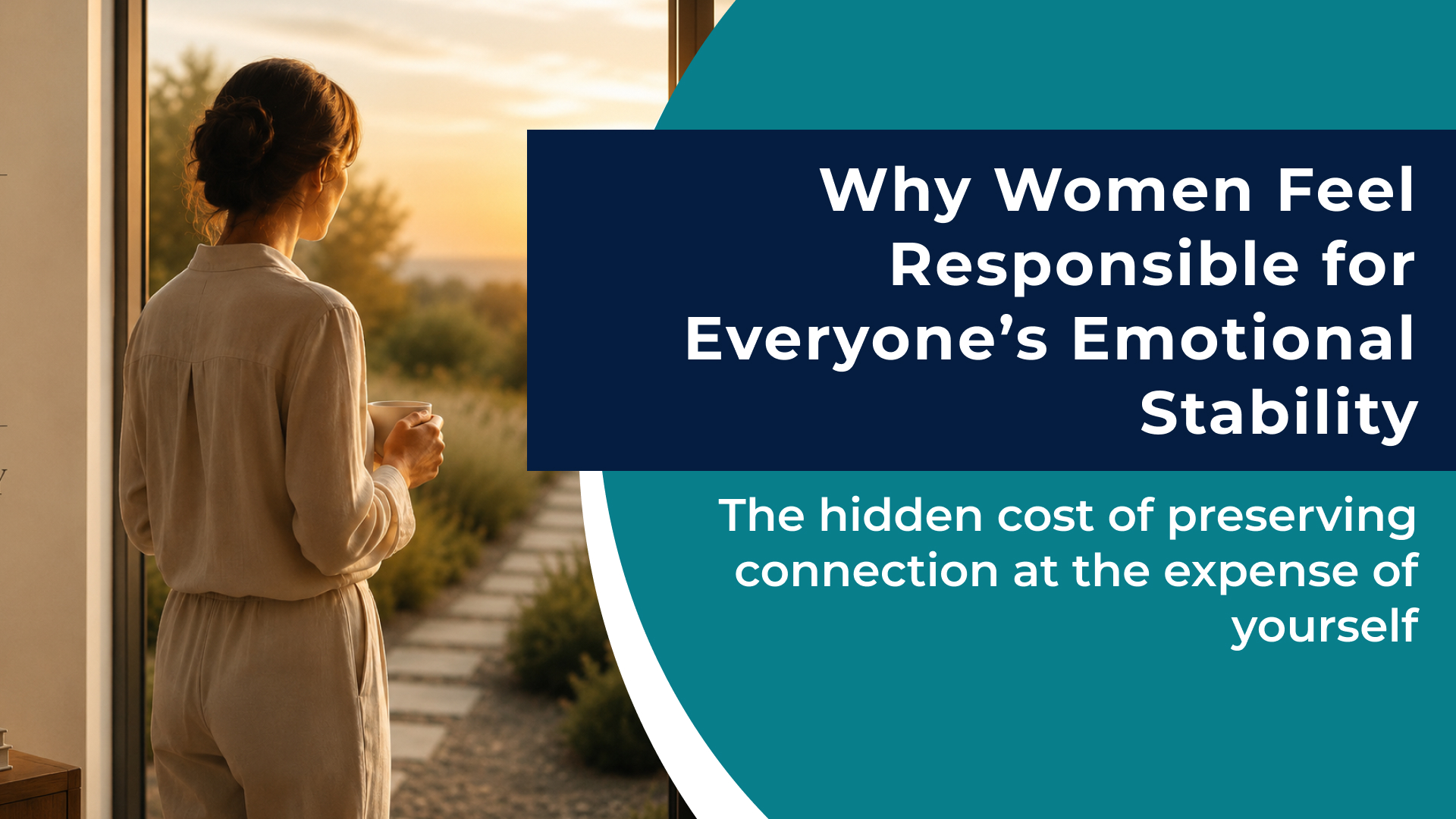

Series: Belonging & Relational Stability
A relational inquiry by Jeanette Mundy and Dr Jordan Marijana Alexander through RelateAble.Global™
Together, the series explores how women are socialised around relationship, belonging, emotional stability, and relational participation, and how these patterns shape women’s experiences across leadership, workplaces, families, culture, and social systems.
Throughout the series, Jeanette and Jordan write from complementary but distinct lenses. Jeanette’s work explores the lived relational experience of women, including emotional labour, self-monitoring, self-erasure, voice, legitimacy, and relational participation. Jordan’s work explores the broader organisational, cultural, systemic, and societal structures shaping these patterns and the hidden human infrastructure modern systems increasingly depend upon.
Together, the series builds a broader relational inquiry into belonging, emotional stability, feminine ontology, leadership, participation, and the human cost of preserving connection inside modern systems.
Learning to Preserve Connection
Women are socialised to preserve relationship and belonging. From an early age, many girls learn that maintaining connection matters. Being considerate matters. Keeping people comfortable matters. Staying emotionally connected matters. Approval, acceptance, harmony, and relational stability are often reinforced as important to preserve, while tension, conflict, disapproval, emotional distance, or relational disruption can begin to feel deeply uncomfortable very quickly.
As a result, women often become highly aware of emotional atmospheres inside the environments they participate in. They notice shifts in tone, disappointment, withdrawal, frustration, awkwardness, emotional tension, and instability early. They notice when someone becomes upset, disconnected, irritated, uncomfortable, or emotionally unsettled. Emotional atmospheres do not simply register as background conditions. They begin carrying relational meaning.
Over time, many women become increasingly organised around maintaining emotional equilibrium inside relationships, families, workplaces, leadership environments, and social systems. They smooth tension, anticipate reactions, reduce instability, manage emotional atmospheres, and work to preserve connection and relational continuity around them. And because these patterns are often socially rewarded as caring, emotionally intelligent, relationally aware, or easy to work with, they can become deeply normalised long before women recognise the cost of carrying them.
Becoming an Atmosphere Reader
Women do not become atmosphere stabilisers accidentally. The constant awareness of moods, reactions, tension, disappointment, and emotional shifts gradually trains women to participate inside relationships with one eye always on the emotional state of the environment itself. Attention begins splitting. Part of the woman is participating in the conversation, the meeting, the family interaction, the relationship, or the leadership environment, while another part is simultaneously monitoring how everyone else is feeling, what the atmosphere is doing, and whether emotional instability is beginning to build.
This changes how women participate. Expression becomes calibrated against possible relational consequences. Women begin anticipating how words will land, how tension might escalate, whether someone will withdraw, become uncomfortable, react defensively, feel hurt, or create disconnection. Emotional equilibrium starts becoming something to maintain rather than simply experience. Many women learn to soften delivery, smooth discomfort, absorb emotional charge, manage reactions, reduce friction, and restore steadiness before instability fully emerges.
The important point here is that these patterns are rarely experienced as self-abandonment while they are happening. They often feel like maturity, care, emotional intelligence, responsibility, professionalism, leadership, or simply being good with people. Yet underneath these behaviours sits a deeper organising pattern: the growing responsibility many women feel for maintaining emotional continuity within the environments they participate
Becoming Responsible for Emotional Stability
What makes this difficult to recognise is that many women become extremely good at it. They become the person who can calm the room, soften conflict, hold difficult emotional situations together, reduce friction between people, anticipate tension before it escalates, and restore emotional steadiness when environments become unsettled. Families rely on it. Workplaces rely on it. Relationships rely on it. Entire emotional systems can begin functioning around women quietly absorbing instability before it fully surfaces.
This is where emotional awareness can slowly become emotional responsibility. Women stop simply noticing atmospheres and begin managing them. The atmosphere itself becomes something they feel responsible for maintaining. If tension increases, they work to reduce it. If relationships become strained, they work to restore connection. If someone becomes emotionally reactive, withdrawn, uncomfortable, or upset, attention immediately moves toward stabilising the emotional equilibrium of the environment.
The difficulty is that this responsibility often becomes invisible because it is so deeply normalised and socially rewarded. Women are praised for being emotionally intelligent, calming, supportive, relationally aware, collaborative, caring, adaptable, and easy to work with. Yet beneath these qualities there can also be a constant relational vigilance operating in the background. Part of the woman remains organised around keeping the emotional system functioning smoothly enough for everyone else to remain connected, comfortable, and emotionally steady.
When Emotional Management Becomes Invisible Labour
These patterns do not only shape relationships. They also shape workplaces, leadership environments, teams, and organisational systems. Many organisations quietly depend on women performing invisible emotional and relational labour that is rarely named directly but constantly stabilises the environment around them. Women often become the people who smooth tension after difficult meetings, maintain emotional steadiness inside teams, absorb frustration from others, repair strained relationships, keep communication flowing, reduce interpersonal friction, anticipate emotional fallout, and help maintain relational continuity inside environments operating under pressure.
The problem is that this labour is often interpreted as personality rather than participation. Women are described as collaborative, emotionally intelligent, nurturing, adaptable, supportive, highly relational, good with people, or natural communicators. Yet much of this behaviour is not simply personality expression. It is the result of years of socialisation around preserving connection, reducing instability, maintaining belonging, and protecting relational equilibrium inside the systems they participate in.
This is also why many women become exhausted inside environments that require constant emotional management. Attention remains split for long periods of time. Part of the woman is trying to perform her role, contribute, lead, think strategically, make decisions, communicate clearly, or participate authentically, while another part remains highly organised around monitoring the emotional condition of the environment itself. The emotional system becomes another layer of work being carried in the background.
And because this labour is relational, emotional, and often invisible, it frequently goes unrecognised altogether. The organisation benefits from the steadiness women help create, while the woman herself slowly becomes further disconnected from her own emotional reality, authentic expression, sustainable capacity, and coherent participation.
When Maintaining Connection Starts Costing You Yourself
Little by little, the woman herself begins adjusting around the emotional needs, reactions, comfort, and stability of the environment. More and more of what she genuinely thinks, feels, wants, needs, notices, or disagrees with gets softened, delayed, withheld, or carried privately in order to preserve connection.
This is what we call self-erasure. The woman slowly disappears from participation because maintaining the emotional stability of the environment becomes more important than remaining fully connected to herself within it.
The difficulty is that the pattern is rarely recognised while they are inside it because it often looks caring, responsible, emotionally intelligent, relationally aware, adaptable, collaborative, or mature. She may simply experience it as trying to keep relationships functioning, conversations calm, people comfortable, workplaces manageable, or family environments emotionally steady. Yet slowly, there is less and less room for her own reactions, needs, preferences, instincts, frustrations, boundaries, and discernment inside the relationship itself.
This is where emotional equilibrium maintenance becomes exhausting. Not only because of the tension it carries, but because they are concurrently carrying themselves in relation to the environment. Attention becomes split between participating authentically and managing how participation might affect everyone else emotionally. She calculates how honest to be, how direct to be, how much emotion is acceptable to show, whether something is worth bringing up, whether disagreement will create instability, or whether staying quiet will keep the relationship emotionally intact.
Eventually, many women become so practised at maintaining emotional continuity around them that they stop fully noticing what they themselves actually think, feel, want, need, or know. The atmosphere of the environment becomes louder than their own internal experience. And this is where relational stability can begin costing women not only energy and expression, but connection to themselves.
The Deeper Relational Question
The deeper question is not whether women should stop caring about relationships, emotional atmospheres, or the wellbeing of others. Care matters. Relationships matter. Emotional awareness matters. The question is what happens when maintaining emotional equilibrium becomes so dominant that women lose access to themselves within the process of preserving connection.
Because there is a significant difference between participating consciously inside relationships and becoming responsible for holding the emotional stability of the entire environment together. One allows women to remain connected, expressive, discerning, and fully present within relationship. The other slowly organises participation around emotional management, self-monitoring, tension reduction, and maintaining continuity at personal cost.
This is where many women begin confronting a much deeper relational question. Can connection survive without constant self-adjustment? Can relationships remain intact without continuously smoothing tension, carrying emotional responsibility, softening expression, or protecting others from discomfort? Can a woman remain caring, relationally aware, emotionally intelligent, and deeply connected without disappearing from participation herself?
Because perhaps the real work is not learning how to care less about relationships. Perhaps the real work is learning how to remain fully present inside them without losing connection to yourself in the process.
Jeanette Mundy is cofounder of RelateAble.Global™, a relational leadership and human transformation ecosystem exploring belonging, relational participation, feminine ontology, leadership, emotional labour, and the hidden relational patterns shaping how women participate in work, relationships, leadership, and life.
This article forms part of the Belonging & Relational Stability series developed through RelateAble.Global™ by Jeanette Mundy and Dr Jordan Marijana Alexander.
Follow Jeanette Mundy and Dr Jordan Marijana Alexander on the Engenesis platform for more articles in this series and related relational leadership work.