

Background - A Human Act Before Any Interpretation
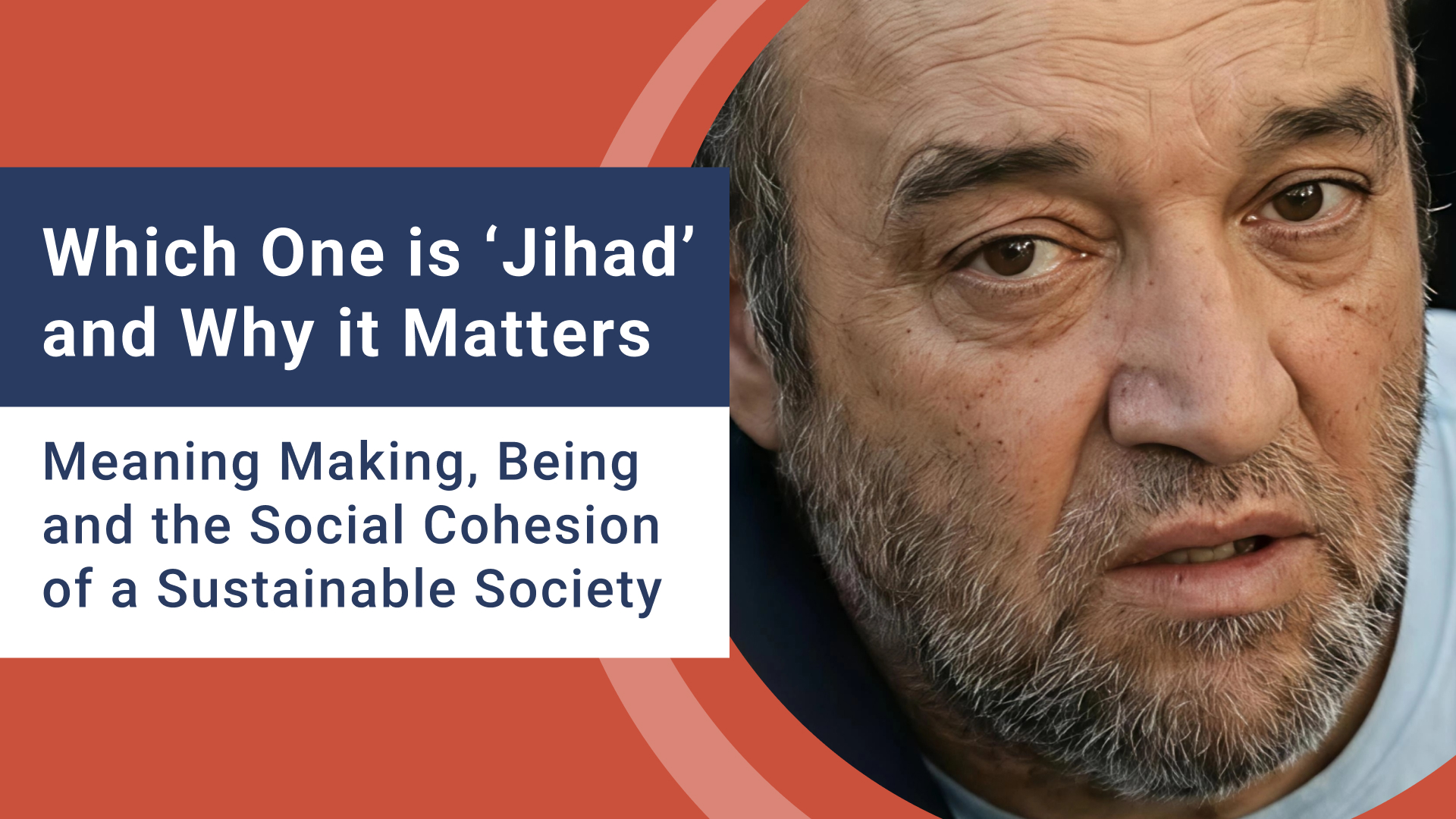
On an ordinary day at Bondi Beach, an extraordinary human act unfolded in full view of others. In a moment of acute danger, while fear spread and uncertainty paralysed many, one man moved toward the threat rather than away from it. Ahmed al Ahmed placed himself directly in harm’s way to disarm an armed attacker and protect strangers he did not know.
This was not an act performed from a distance, nor one shielded by ideology, anonymity, or abstraction. It occurred face to face, body to body, with full exposure to risk and the real possibility of death. There was no guarantee of success, no promise of survival, and no audience to impress. Only a decision made in the immediacy of the moment.
What followed was equally revealing. Across cultural, religious, and ideological boundaries, people instinctively recognised the act as courageous and worthy of honour. The response was not mediated by doctrine or debate. It emerged prior to explanation. Something deeply human was perceived and acknowledged.
This recognition matters. It suggests that certain qualities of action are intelligible without translation. Before we name them, theorise them, or assign them to belief systems, we encounter them as lived reality. Courage, responsibility, and the willingness to place one’s own life at risk for the sake of others do not require justification to be understood. They are grasped directly.
And yet, almost immediately, tension arises.
The same event that revealed a universal human quality also reopened a painful and unresolved question. How can acts that protect life and acts that destroy innocent life sometimes be spoken of using the same word. How can radically opposed orientations toward the world be framed under a single banner.
This is not a theological problem alone. It is an ontological one.
Before any religious, political, or legal interpretation, there is a more fundamental issue at stake. How human beings make sense of their actions. How meaning is formed, anchored, and enacted. And how intention shapes not only what is done, but what that doing becomes.
To address this responsibly, we must step back from slogans, reactions, and inherited narratives. We must look beneath the surface of acts to the structures that generate them. Sense making. Meaning-making. Intention. And the way these shape Being itself.
Only then can we begin to understand why one act stabilises social cohesion while another fractures it. Why one is recognised as life-affirming across differences, while another corrodes trust, safety, and sustainability at every level of society.
Introduction - Why the Same Word Can Point to Opposite Realities
When acts of courage and acts of terror are discussed using the same language, confusion is inevitable. Public debate quickly collapses into defensiveness, accusation, or silence. Words become charged, meanings harden, and careful inquiry is replaced by reaction.
One such word is jihad.
For many, it immediately evokes fear, violence, or religious extremism. For others, it carries an internal and ethical meaning that has little to do with harming others. Between these poles lies a profound failure of sense-making. The problem is not the word alone. It is the absence of a framework capable of distinguishing between fundamentally different orientations of action.
This article does not attempt to defend religious doctrine, justify violence, or rehabilitate slogans. Its purpose is more basic and more demanding. It asks how human beings orient themselves toward action. How intention is formed. How meaning is anchored. And how these shape what an action becomes in the world.
From an ontological perspective, no action is defined solely by what happens on the surface. Two people may perform outwardly similar acts while inhabiting radically different inner structures of intention and meaning. One act can stabilise trust and social cohesion. Another can tear it apart. Treating them as equivalent because of shared language is a category error.
Phenomenologically, this difference is not abstract. It is lived and felt. We recognise it when an action resonates as life-affirming, even before we can articulate why. We also sense it when something feels profoundly wrong, even if it is framed as righteous or necessary.
The Bondi incident brings this distinction into sharp relief. One individual moved toward danger to protect others, without promise of reward or recognition. Another inflicted violence on innocents, reportedly believing the act itself carried meaning and justification. The difference between these two is not explained by intensity, sacrifice, or conviction. It lies elsewhere.
It lies in intention.
It lies in meaning-making.
It lies in Being.
Without a structured way of understanding these dimensions, societies become vulnerable to distortion. Words are emptied of context. Actions are severed from responsibility. And moral language is weaponised in ways that undermine social sustainability and cohesion.
This is why the discussion of jihad cannot remain at the level of reaction or definition alone. It must be situated within a broader human framework that accounts for how meaning is generated, how intention is developed, and how action either contributes to or erodes the conditions for collective life.
In the sections that follow, the inquiry will proceed carefully. First by examining the etymological roots of the word jihad and its textual foundations. Then by contrasting two radically different enactments of effort and sacrifice. And finally by situating these distinctions within the Fulfilment Pyramid and the discourse of Authentic Sustainability, where intention, experience, and Being determine whether societies endure or disintegrate.
Etymology and Context - What the Word Jihad Originally Pointed Toward
Before jihad became politicised, sensationalised, or weaponised, it had a far more basic and human meaning. The word derives from the Arabic root jahada, which refers to exertion, effort, or striving. At its core, it points to the act of applying oneself with seriousness and commitment toward a purpose that is perceived as meaningful.
Importantly, this root does not intrinsically refer to violence. It refers to directed effort. Struggle in this sense is not defined by destruction, but by the weight and cost of what is being undertaken. The struggle may be internal, ethical, relational, or situational. Violence is not embedded in the term. Orientation is.
Within the Quran itself, this distinction is visible when verses are read in context rather than extracted as slogans. Numerous passages frame striving as moral discipline, perseverance, patience, and responsibility, often explicitly detached from physical conflict.
Classical interpretations emphasise that when the Quran speaks of striving, it often refers to engagement through message, conduct, and moral perseverance rather than physical force. In this sense, striving is understood as intellectual, ethical, and communicative effort, not the use of weapons.
These verses matter not because they settle theological debates, but because they reveal how the term originally functioned. Jihad referred to disciplined effort in service of what was understood as right, just, and meaningful. It assumed responsibility, restraint, and accountability.
It must also be acknowledged that there are verses and historical moments within Islamic tradition that address physical violence. These references are not absent, nor can they be ignored. However, when violence appears in Islamic history or jurisprudence, it appears under strict contextual conditions related to defence, proportionality, and the protection of life. It is not treated as an expression of virtue in itself, nor is it synonymous with indiscriminate harm. In this sense, it is not radically different from how the use of force is understood today within modern defence forces and national security frameworks, where legitimacy depends on necessity, restraint, accountability, and the protection of civilians. When those boundaries collapse, whether in religious or secular contexts, the action ceases to function within its original ethical field and becomes something else entirely.
This is where distortion begins.
When jihad is severed from intention, meaning, and responsibility, it becomes a hollow container. Any act can be poured into it and retrospectively justified. The word no longer points toward disciplined striving, but toward identity-driven aggression. The effort remains, but its orientation is lost.
This is not unique to Islam. Every civilisation has words that once pointed toward sacrifice, courage, or responsibility, and later became instruments of domination when detached from context and meaning. What changes is not the vocabulary, but the structure of sense-making behind it.
The critical distinction, then, is not between religious and secular interpretations. It is between effort oriented toward the protection and flourishing of life, and effort oriented toward destruction justified by borrowed meaning.
This distinction becomes unmistakable when we contrast two enactments of risk and sacrifice. One grounded in responsibility for others. The other grounded in a distorted narrative of purpose.
That contrast is where we now turn.
When a Word Is Torn from Its Ground - Media Reduction, Extremism and the Loss of Meaning
Few words have been handled as carelessly in public discourse as the word jihad. Torn from context, flattened by repetition, and sensationalised by mass media, it is routinely presented as a synonym for violence or terror. This reduction does not merely misinform. It actively empowers extremism.
When a word that originally referred to disciplined effort and moral striving is reduced to spectacle and fear, extremists benefit twice. First, their actions receive the symbolic weight they seek. Second, the wider public loses the ability to distinguish between radically different orientations of action. Meaning collapses into caricature.
From a mainstream Muslim perspective, this collapse is deeply problematic. As outlined earlier, jihad in its primary and ethically dominant sense refers to striving in the path of what is right, with intention, restraint, and responsibility at its core. Protection of life, moral discipline, and accountability are not optional elements. They are defining criteria.
From a critical and ontological perspective, the issue runs even deeper. The problem is not only how a word is defined, but how meaning itself is constructed, interpreted, and imposed.
Here a devil’s advocate position must be acknowledged.
Some will argue that the violent interpretation is the real one. That non-violent readings are naïve, revisionist, or evasive. That historical examples of violence prove the point. This position deserves to be taken seriously, not dismissed. But it also reveals something important.
It assumes unmediated access to truth.
It assumes that a word directly maps onto reality without interpretation, context, or structure of understanding. It assumes that meaning is simply there, waiting to be extracted.
This assumption is precisely what modern philosophy has challenged.
Thinkers such as Jacques Derrida, the French philosopher, pointed out that meaning is never encountered raw. It is always mediated through language, context, history, and interpretation. Deconstruction was not an attempt to deny reality, but to expose how certainty is often produced by ignoring the layers through which meaning is formed.
This is where a crucial clarification is required.
The claim is not that all reality is a construct.
The claim is that all access to reality is mediated.
This distinction becomes concrete in the very incident under discussion. Both individuals engaged in what could be described as jihad in the most literal sense of exertion and risk. Both placed their own lives in danger. Yet they did so for radically different causes, guided by opposing intentions and incompatible constructions of what was considered right. One risked his life to protect others. The other risked his life to destroy innocent lives while justifying that destruction as meaningful. The decisive difference, therefore, is not the presence of struggle, sacrifice, or even death. It is the intention that shaped the act, the meaning-making that justified it, and the conception of what was deemed right and worthy of sacrifice.
This is precisely why serious engagement with sacred texts has always required the humanities and formal disciplines of interpretation. In Biblical studies, this takes the form of exegesis, hermeneutics, and historical contextualisation. In Islamic intellectual tradition, it appears as ilm al tafsir and usul al fiqh, systematic sciences developed to interpret, contextualise, and apply revelation responsibly. These disciplines exist not to dilute meaning, but to prevent it from being reduced to literalism detached from context, history, language, and ethical responsibility. Without such interpretive frameworks, texts become vulnerable to misuse, and meaning collapses into absolutism.
Assumed divine scripture, religious texts, scientific peer-reviewed papers, philosophical works, and novels rich in metaphor are not newspapers to be read lightly. They demand disciplined interpretation, contextual understanding, and intellectual responsibility if their meaning is not to be distorted or misused.
All we ever know is filtered through the structure of our sense-making. Through our assumptions, histories, fears, and inherited narratives. This does not lead to relativism. It leads to humility.
This distinction is central to the Metacontent Discourse. We do not deny content. We examine the meta content that shapes how content is perceived, interpreted, and acted upon. The danger arises not from interpretation itself, but from unexamined interpretation mistaken for absolute truth.
When individuals or groups believe they possess direct, unquestionable access to meaning, violence becomes possible. When humility is lost, responsibility erodes. When meaning is treated as fixed and owned, others are easily dehumanised.
This is why distorted relationships to concepts like jihad are so dangerous. Not because interpretation exists, but because interpretation is denied.
Acknowledging mediation forces us to ask deeper questions. How are people making sense of the world. What meanings are they anchoring their actions in. What intentions are being cultivated. And crucially, how are they being.
This acknowledgement does not weaken moral clarity. It strengthens it. It allows us to distinguish between effort in service of life and effort in service of illusion without pretending we stand outside interpretation ourselves.
Only from this position of epistemic humility can societies responsibly address sense-making, Being, meaning-making, cause creation, intention development, and the ethical weight of action. Without it, debates harden, words weaponise, and violence continues to find justification in borrowed certainty.
Two Strivings, Two Worlds - Risk in Service of Life Versus Violence in Service of Illusion
At the surface level, both the hero at Bondi and the attacker engaged in what could be described as risk-taking. Both moved decisively. Both faced the possibility of death. If one remains at the level of action alone, the distinction can appear blurred. This is precisely where many analyses fail.
Ontologically, these two acts inhabit entirely different worlds.
Ahmed al Ahmed stepped forward with a singular orientation. The preservation of life. His action was responsive to an immediate reality. Innocent people were in danger. His body, awareness, and decision aligned in service of reducing harm. The risk he accepted was not a means to validate identity, belief, or belonging. It was a consequence of responsibility assumed in the presence of others.
The attackers’ action, by contrast, was not oriented toward life, but toward an abstracted narrative imposed upon reality. Innocent people were reduced to symbols. Violence became a vehicle for meaning rather than a tragic last resort. The body was used as an instrument of ideology rather than as a site of responsibility.
This difference is not explained by courage versus cowardice. It is explained by what the action served.
In the first case, effort was subordinated to reality. Meaning emerged from responsiveness to what was actually happening. In the second case, reality was subordinated to a pre-constructed meaning. The world was forced to conform to an internal script, regardless of consequence.
Phenomenologically, this distinction is immediately felt by observers. One act resonates as protective and grounding. The other destabilises, terrifies, and fractures trust. These responses are not cultural accidents. They reflect a deep human sensitivity to whether an action is aligned with the continuity of life or the assertion of illusion.
This is why the public response to the Bondi incident was so unified. People did not need to know the hero’s background, beliefs, or motivations in detail. The orientation of the act was legible. It expressed responsibility rather than domination.
What we are witnessing here is not a clash between good and evil in a simplistic sense. It is a divergence in sense-making and meaning-making.
The hero made sense of the situation as one requiring immediate protection of others. Meaning arose from service, presence, and self-transcendence. The attacker made sense of the situation through a distorted framework in which destruction was framed as purpose. Meaning was borrowed, imposed, and insulated from reality.
This divergence matters profoundly. It determines not only the moral quality of an action, but its impact on the social fabric. One strengthens cohesion by reaffirming shared human values. The other erodes it by introducing fear, suspicion, and fragmentation.
To understand why this difference emerges, we must look deeper than behaviour. We must examine the structures through which intention is formed and meaning is anchored.
This brings us to the role of sense-making, meaning-making, and Being itself.
Sense-Making, Meaning-Making, and Being - Why Intention Determines What an Action Becomes
Human action does not emerge from impulse alone. Before any movement of the body, there is an interpretation of reality. A situation is perceived, framed, and given significance. This process is sense-making. From that interpretation, a deeper layer follows. The action is assigned purpose, value, and justification. This is meaning-making.
These two processes operate continuously, often below conscious awareness. Together, they shape intention.
Intention is not a stated goal or declared belief. It is the orientation of effort toward what one perceives as meaningful. Two people can face the same external situation and arrive at radically different intentions because they are making sense of reality through different internal structures.
In the Bondi incident, the hero’s sense-making was grounded in immediacy and presence. There was a clear perception of danger to others. The meaning that followed was equally clear. Protecting life mattered more than personal safety. Intention emerged as responsibility in action.
For the attackers, sense-making was distorted. Reality was filtered through an abstract narrative that overrode the concrete presence of other human beings. Meaning was not discovered in the situation itself, but imposed upon it. Intention became detached from consequence and insulated from the lived reality of harm.
This difference cannot be reduced to information, intelligence, or emotional intensity. It is a difference in Being.
These distinctions are explored in greater depth in Metacontent, the book in which the Nested Theory of Sense Making is developed. There, sense making and meaning making are shown to operate across multiple layers rather than as isolated cognitive acts. From immediate perception and narrative framing to deeper mental models, perspectives, domains, and paradigms, each layer shapes how reality is encountered and how intention is formed. When these layers remain unexamined, individuals can act with complete conviction while remaining profoundly misaligned with reality. Metacontent offers a systematic account of why distortion can feel coherent from within, and why developing these layers consciously is essential for ethical responsibility and sustainable human action.
Being, as elaborated in Human Being book (and Being book), refers to how a person is oriented toward the world. It concerns whether one is open or closed to reality, whether one responds or imposes, and whether meaning is allowed to emerge from lived experience or is forced onto life through pre fabricated narratives. Being is not an inner state detached from action. It is the ontological posture from which intention arises and through which action becomes either life affirming or destructive.
When Being is grounded, intention remains tethered to responsibility. When Being is fractured, intention becomes brittle and extreme. In such cases, effort intensifies while discernment collapses. This is where the most dangerous distortions arise.
Meaning-making, when disconnected from integrity and reality testing, becomes a powerful destabilising force. It can justify almost anything. Violence, cruelty, and sacrifice can all be framed as necessary when meaning is no longer accountable to the lived world.
This is why distorted relationships to concepts like jihad are so dangerous. The issue is not the presence of effort, sacrifice, or conviction. It is the absence of coherent sense-making and grounded meaning-making. When these are lost, even words originally associated with discipline and responsibility can be turned into instruments of destruction.
At the societal level, this has profound consequences. Shared meaning erodes. Trust weakens. Fear replaces cohesion. Communities begin to fracture along lines of suspicion and identity. What emerges is not sustainability, but instability.
To prevent this, intention cannot be left unexamined. Meaning cannot be outsourced to slogans or inherited narratives. These dimensions must be developed consciously and structurally.
This is precisely where the Fulfilment Pyramid becomes relevant.
The Fulfilment Pyramid - Developmental, Experiential, and Relational Dimensions of Action
The Fulfilment Pyramid, as developed in the book Sustainabilism, is a framework for understanding why some human actions strengthen life and society while others undermine them. It shows that fulfilment does not come from intensity, sacrifice, or conviction alone, but from the alignment of three dimensions: how intention is developed and anchored in meaning, how that intention is lived with integrity in real experience, and how action is sustained relationally over time. When these dimensions are coherent, effort contributes to personal fulfilment and social stability. When they are misaligned, even well intentioned actions can become destructive and destabilising.
To understand why some actions stabilise societies while others corrode them, we need a structure that accounts for more than outcomes or intentions declared after the fact. The Fulfilment Pyramid offers such a structure by distinguishing three interdependent dimensions of human action.
The first is the Developmental Dimension. This is where intention is formed and anchored. It is not about tactics, but about cultivating a deep orientation toward meaning. At this level, a person clarifies what they stand for, what they are willing to sacrifice for, and what kind of life their actions are meant to serve. When this dimension is neglected, intention becomes reactive, borrowed, or ideological. When it is developed, intention remains grounded in responsibility and reality.
In the Bondi incident, the hero’s action emerged from a developmental orientation toward the protection of life. The meaning was not constructed in the moment. It was already present as a lived value. This is why the response was immediate and coherent. The action served a meaning that had been previously integrated.
By contrast, when the developmental dimension is distorted or bypassed, intention is often outsourced to narratives that promise significance without responsibility. This is where destructive interpretations of concepts like jihad take hold. Effort remains, but its anchoring is hollow.
The second is the Phenomenological (or Experiential) Dimension. This concerns how intention is embodied in lived experience. It is where effectiveness, integrity, presence, and coherence appear. This is the domain of Being. Once intention is clear, the question becomes how one shows up in reality. Whether action is congruent, restrained, responsive, and attuned to consequence.
Here, the difference between protection and destruction becomes unmistakable. The hero’s Being expressed courage without aggression, decisiveness without domination, and self sacrifice without spectacle. The action reduced harm and restored a degree of safety. This is fulfilment as integrity in motion.
The attackers’ action, however intense, lacked this coherence. There was no integration between intention and lived reality because the intention itself was detached from responsibility. The result was not fulfilment, but rupture.
The third is the Relational Dimension. This includes logistics, coordination, timing, resources, and social organisation. It determines whether action is sustainable over time. While important, it is secondary. Without the first two dimensions, efficiency only accelerates harm. Organisation without meaning produces sophisticated dysfunction.
The Fulfilment Pyramid makes clear that action cannot be evaluated at the surface alone. What matters is how intention is developed, how it is embodied, and how it relates to others and to time. When these dimensions are aligned, effort contributes to individual fulfilment and collective stability. When they are misaligned, even intense sacrifice can undermine the very fabric of society.
This brings us to a broader implication. The sustainability of a society is inseparable from the quality of sense-making, meaning-making, and Being cultivated within it.
The Fulfilment Pyramid in Context - Why Striving Without Coherence Produces Destruction, Not Fulfilment
The Fulfilment Pyramid offers a way to understand why acts that involve similar levels of effort, sacrifice, or risk can lead to radically different outcomes in the world. It shows that fulfilment is not determined by intensity or conviction alone, but by how intention is formed, how it is embodied, and how it is sustained within reality.
At the first level, the Developmental Dimension concerns how intention is grounded. This is where meaning is clarified and where a person determines what their effort is ultimately in service of. Striving that emerges from this dimension is anchored in a coherent conception of what matters and why. In the Bondi incident, the hero’s intention was already developed prior to action. The protection of life was not improvised in the moment. It was an orientation of Being that had been integrated over time. This is why the response was immediate, proportionate, and aligned with reality as it presented itself.
By contrast, when the developmental dimension is bypassed or distorted, effort can still occur, but it is no longer anchored in authentic meaning. Intention becomes borrowed from abstract narratives rather than cultivated through grounded reflection. In such cases, sacrifice may be real and risk may be genuine, but what is being served is no longer life. Striving remains, but it is hollow at its core.
The second level, the Phenomenological Dimension, concerns how intention is embodied in lived experience. This is where integrity, effectiveness, and coherence appear, or fail to appear. In the hero’s action, intention translated directly into conduct that reduced harm and restored a measure of safety. The action was effective precisely because it was restrained, responsive, and attuned to the immediate reality of others. Fulfilment here is not emotional reward, but coherence between care, action, and consequence.
Where this dimension collapses, intensity replaces integrity. Action may be dramatic, forceful, or absolute, yet phenomenologically incoherent. Violence inflicted on innocents is a clear indicator of such collapse. Regardless of how the act is justified internally, it fails the test of lived coherence because it fractures reality rather than responding to it. In this sense, the action is not fulfilled. It is ruptured.
The third level, the Relational Dimension, concerns sustainability. Actions do not occur in isolation. They either reinforce or corrode the conditions of shared life. The hero’s act briefly strengthened social trust and cohesion by reaffirming a shared human value: that life is worth protecting, even at personal cost. This is how fulfilment extends beyond the individual into the social field.
Violence justified through distorted meaning making does the opposite. It amplifies fear, erodes trust, and destabilises the relational fabric upon which societies depend. Even if such actions are framed as sacrifice or struggle, they fail relationally. They cannot be sustained without increasing coercion and fragmentation.
Seen through the Fulfilment Pyramid, the distinction becomes unmistakable. Both individuals exerted effort. Both accepted risk. Both could be described, at a surface level, as striving. Yet only one action was fulfilled, because only one was grounded in authentic meaning, embodied with integrity, and capable of sustaining social coherence.
This is why the question is never whether effort was present, but what the effort was in service of. Striving without developmental grounding, phenomenological integrity, and relational accountability does not produce fulfilment. It produces destruction, regardless of the language used to justify it.
In this light, the Fulfilment Pyramid does not merely explain individual behaviour. It reveals why societies remain stable or unravel. When intention is cultivated responsibly, enacted with integrity, and sustained relationally, effort strengthens life. When these dimensions are absent, even the language of virtue can become a vehicle for harm.
If you wish to explore this framework in greater depth will find a full and systematic treatment of the Fulfilment Pyramid, along with its wider implications for leadership, institutions, and societal coherence, in the book Sustainabilism. There, the model is developed not as an abstract theory, but as a practical architecture for understanding why commitments endure or collapse across personal, organisational, and civilisational contexts.
Hatred, Love, and the Deeper Ontology of Violence - Why the Problem Is Not Weapons or Ideology
In the aftermath of violent events, public discourse often gravitates toward surface-level explanations. Attention is placed on weapons, political ideologies, extremism, racism, or antisemitism. While these factors may shape how violence manifests, they do not explain why a person becomes capable of it.
These explanations mistake instruments and narratives for causes.
At a more fundamental level, violence reflects a breakdown in Being. Specifically, it reflects a distorted relationship to love.
Love, in this context, is not sentimentality, affection, or moral posturing. It is an ontological orientation toward the value of life itself. It is the capacity to recognise the reality of others as real, consequential, and worthy of care, even in the absence of familiarity or agreement.
When this orientation is present, harm becomes difficult to justify. When it erodes, almost anything can be rationalised.
Hatred does not emerge in a vacuum. It arises from ill-formed sense-making and fractured understanding of reality. When a person’s perception of the world becomes distorted, others are no longer encountered as human beings, but as abstractions, threats, or symbols. At that point, violence is no longer experienced as a violation of reality, but as an expression of meaning.
This is why ideology alone cannot explain violence. Ideologies do not kill people. People kill when their relationship to reality has collapsed to the point where destruction feels coherent. Racism, antisemitism, and extremism are not primary causes. They are containers into which hatred pours once love has been displaced.
Within the Being Framework, this represents a profound failure of Authenticity. Authenticity is not self-expression or identity affirmation. It is accurate contact with reality. It is the ability to see oneself and others without distortion, projection, or self-deception. When authenticity collapses, reality is replaced by narrative. Meaning becomes borrowed rather than discovered.
In such conditions, sense-making narrows. Meaning-making becomes rigid. Intention loses accountability. The world is no longer encountered, but imposed upon. This is the soil in which hatred grows.
The Bondi incident again provides a sharp contrast. The hero’s action reflected not only courage, but an intact relationship to love. Others were encountered as lives worth protecting, not as variables in a story. The willingness to risk one’s own life in defence of strangers does not arise from ideology. It arises from a Being that remains connected to the intrinsic value of life.
This distinction matters because it reveals why focusing solely on tools, policies, or labels will always be insufficient. Without addressing the deeper relationship human beings have to love, reality, and meaning, societies will continue to treat symptoms while the root remains untouched.
Violence is not sustained by hatred alone. It is sustained by a collapse in the structures that allow love to remain present in perception, judgment and action.
Authentic Sustainability and Social Cohesion - Why Meaning-Anchored Action Determines Whether Societies Hold Together
Sustainability is often discussed in terms of systems, policies, and resources. While these matter, they rest on a more fragile foundation than is usually acknowledged. No society can remain stable if the way its members make sense of action and meaning is incoherent or distorted.
Authentic Sustainability begins at the level of human orientation. It depends on whether individuals are capable of forming intentions that are grounded in reality, anchored in responsibility, and expressed through coherent Being. When this capacity erodes, social systems may continue to function mechanically, but trust, cohesion, and legitimacy begin to dissolve.
The Bondi incident illustrates this clearly. A single act, grounded in responsibility and protection of life, briefly restored a sense of shared humanity. It reminded people that courage in service of others is still possible. Such acts do not merely prevent harm in the moment. They reinforce the invisible threads that hold societies together. Mutual trust. Moral clarity. Confidence that others will act responsibly when it matters.
By contrast, actions driven by distorted meaning-making corrode these same foundations. When violence is justified through abstract narratives that override lived reality, fear replaces trust. Communities withdraw into suspicion. Difference becomes dangerous. The social fabric frays, not because of disagreement, but because the basic conditions for coexistence are undermined.
This is why distorted relationships to concepts like jihad are so destabilising. When effort is detached from responsibility and meaning is severed from consequence, even language intended to inspire discipline and moral seriousness becomes a vehicle for destruction. The danger does not lie in intensity or sacrifice. It lies in unexamined intention.
Authentic Sustainability therefore requires more than regulation or enforcement. It requires a culture capable of cultivating coherent sense-making and grounded meaning-making. It requires citizens who can distinguish between effort in service of life and effort in service of illusion. And it requires shared frameworks that make these distinctions visible and discussable without fear.
When societies neglect this work, they become vulnerable to extremes. When they invest in it, they develop resilience that no policy alone can provide.
This leads to a final and necessary clarification. The inquiry undertaken here is not about defending any religion or condemning any population. It is about reclaiming human capacities that exist across cultures and traditions, and recognising the consequences when they are distorted.
When Authentic Action Cuts Across Ideology - Why Reality Recognises Integrity Before Belief
One of the most revealing aspects of the Bondi incident was not only the violence itself, but the response to a single human act within it. The courage shown by Ahmad al Ahmed in intervening to protect others was recognised across ideological, political, and cultural divides. People who rarely agree on social issues, ethics, or policy responded with the same instinctive affirmation.
Figures associated with conservative media and commentary publicly recognised the courage of the act. This included voices such as Donald Trump, PragerU commentators who are known for strong ideological framing and frequent use of persuasive media tactics, and media personalities like Piers Morgan. These are individuals and platforms that many would regard as polarising, and in some cases, historically unjust or selective in their assessment of complex social issues.
That recognition is not insignificant.
What it reveals is that certain human actions cut through narrative, bias, and ideological posture. When an act is grounded in authenticity, courage, care, and love for life, it becomes legible even to those whose broader frameworks may be contested. Reality asserts itself before interpretation has time to harden.
This does not retroactively validate every position held by those who recognised the act. Nor does it absolve past misjudgements, selective outrage, or ideological distortions. That is not the point. The point is ontological, not political.
At a deeper level, authenticity has a unifying force. When Being is coherent, when intention is grounded in responsibility, and when action serves life rather than identity, it resonates across differences. The recognition does not arise because people suddenly agree on values. It arises because something real has occurred.
This is a crucial insight for social cohesion. It shows that beneath ideological conflict lies a shared human capacity to recognise integrity when it appears. Even in a fractured media landscape saturated with propaganda, distortion, and outrage, reality still breaks through at moments of genuine courage.
This again distinguishes authentic action from performative morality. Performative acts require ideological alignment to be recognised. Authentic acts do not. They stand on their own. They are felt before they are debated.
In this sense, the Bondi incident demonstrates something hopeful. Despite polarisation, despite historical injustice, despite manipulation of narratives, there remains a shared human ground. It is accessed not through argument, but through Being expressed in action.
This is why such acts matter beyond the immediate moment. They remind societies that connection is still possible at the level of reality, even when agreement at the level of ideology remains impossible.
Conclusion - Why Intention, Meaning, and Being Matter More Than Any Label
This inquiry began with a single human act. Not a slogan. Not a doctrine. A moment in which a person stepped forward to protect others at genuine personal risk. What followed was not confusion, but recognition. Across differences, people knew what they were witnessing.
That recognition points to something essential. Human beings possess an intuitive capacity to discern when effort is oriented toward life and when it is oriented toward destruction. This discernment operates prior to language and beyond ideology. It is grounded in how intention, meaning, and Being come together in action.
In Sustainabilism, I describe destabilising forces as events and patterns that fracture stability and challenge the integrity of shared life. Incidents like Bondi are destabilising in precisely this sense. They shake trust, intensify fear, and expose how fragile cohesion can be. Yet within the sadness, something else also emerges. A shared humanity that does not need agreement in order to recognise responsibility, courage, and care when they appear.
The word jihad sits at the centre of this discussion not because it is unique, but because it has become a powerful example of what happens when meaning is severed from context. In its original sense, the term referred to disciplined effort oriented toward what was understood as right and necessary. When detached from responsibility, integrity, and reality, it becomes an empty container into which any act can be poured and retrospectively justified.
This pattern is not confined to one tradition. Every society has words that once pointed toward courage, sacrifice, or duty, and later became distorted when sense-making collapsed. The problem is never effort itself. It is the loss of coherent meaning-making and grounded intention.
The Fulfilment Pyramid makes this visible. When the developmental dimension is neglected, intention becomes reactive or borrowed. When the experiential dimension lacks integrity, action becomes performative or destructive. When relational considerations are prioritised without the first two, efficiency accelerates harm. Alignment across these dimensions is not a luxury. It is a condition for individual fulfilment and collective sustainability.
Bondi also offers a quiet instruction. A simple, genuine act, anchored in a good intention and a meaningful orientation toward the protection of life, briefly united people who otherwise live inside separate narratives. Even polarised media environments and competing ideological tribes could recognise the same thing. That is not a trivial detail. It is a clue. It shows that coherence in Being can cut through division more effectively than argument, and that societies can still be re-stitched through acts that restore trust rather than intensify grievance.
For more than a decade, I have been developing a growing body of work to name these dynamics and respond to them with structure. Not as commentary, but as an attempt to build frameworks for clarity and integrity in how humans make sense of reality, form intentions, and act in the world. Because events like this make the stakes undeniable. Being matters. How we are being matters. Intention matters. Trust matters. Sense-making and meaning-making matter. Leadership matters. Sustainability matters. Not as abstract ideals, but as conditions for whether societies hold together, or unravel.
In a world increasingly shaped by polarisation and abstraction, the central question is not which word is used, but what orientation toward life an action truly serves, and whether we are willing to cultivate the inner and collective conditions that keep that orientation intact.