

The Reflex Before the Word
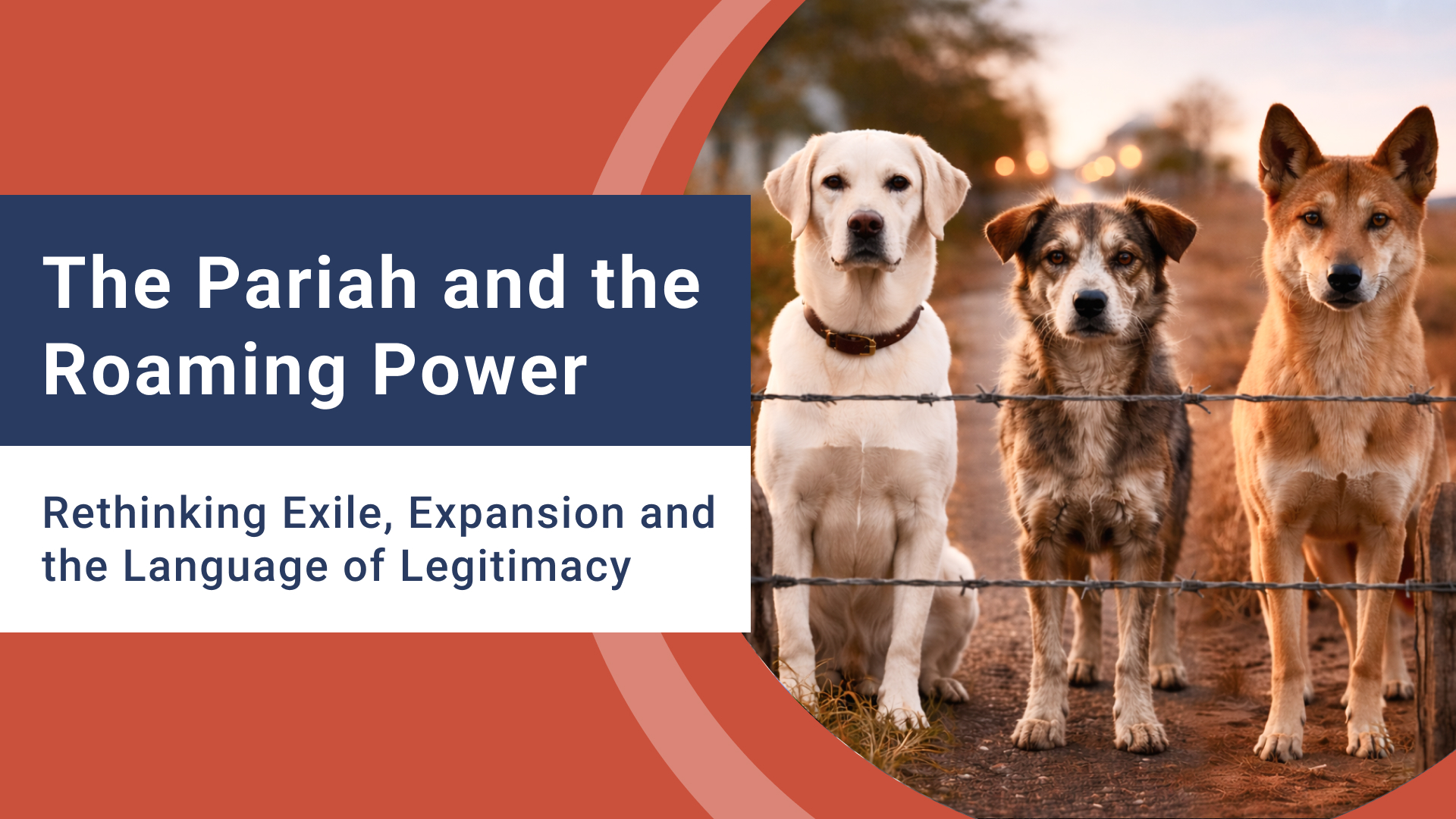
On an ordinary street at dusk, the distinctions appear uncomplicated. A dog sits calmly behind a fence, its posture relaxed, its space defined. Another moves along the pavement without boundary, nose to the wind, uncontained. Somewhere beyond the houses and streetlights, one stands in open land where fences feel recent and temporary.
We do not need instruction to interpret them. The fenced dog feels secure, civil, disciplined. The roaming dog feels uncertain, possibly troublesome. The one in the wild feels distant, untamed, outside the rhythm of domestic order.
These impressions form quickly. We do not conduct analysis. We do not research context. We respond to posture. We respond to placement. We respond to proximity to the house.
A fence implies belonging. A street implies risk. Open land implies resistance to ownership.
The meanings feel natural. We rarely question them. We rarely ask who drew the boundary or when the boundary was drawn. We rarely ask whether roaming is always disorder, or whether remaining uncontained is sometimes simply refusal to be absorbed.
Before we name anything, the hierarchy has already taken shape.
And once the hierarchy feels obvious, the language comes easily.
Pet Dogs - Belonging by Design
There is something deeply comforting about a pet dog. A pet is invited. It belongs inside the fence. It knows where the boundary lies and where it does not. It eats when it is fed, rests where it is placed, and learns the rhythms of the household. Its loyalty is not accidental. It is cultivated. It adapts itself to the expectations of its master and, in return, receives care, protection, and affection.
A pet dog does not wander into every yard. It does not assert itself into unfamiliar territory without invitation. Its world is structured. Its belonging is recognised. It is loved precisely because it is predictable. Its behaviour reassures the household that order is intact.
Domestication, in this sense, is not cruelty. It is arrangement. The pet receives security and stability. The master receives loyalty and compliance. The boundaries are clear. The leash is visible. The relationship is defined. Everyone understands the rules of proximity and distance.
A pet learns what earns approval. It learns tone. It learns posture. It learns when to approach and when to retreat. It is trained not only in behaviour but in expectation. It does not challenge the architecture of the home because the home is not its own to define. Its role is participation within an existing order.
There is nothing inherently wrong with this. Many pets live well. They are protected from the chaos of the street. They do not need to fight for scraps or defend territory. They are brushed, fed, and sheltered. They are integrated into a system that rewards adaptation.
Predictability becomes virtue. Obedience becomes affection. Conformity becomes belonging.
And when a dog behaves this way, we rarely question it. We call it well-trained. We call it civilised. We call it good.
Pariah Dogs - The Uninvited Presence
Not all dogs live behind fences. Some roam. They move through streets without invitation. They do not wait for gates to open. They do not belong to a single household. They belong nowhere in particular and everywhere at once.
These are often called pariah dogs. Street dogs. Strays.
They sleep where they can. They eat what they find. They are not brushed or groomed into uniformity. They do not move according to a master’s rhythm. Their lives are shaped by improvisation rather than arrangement.
To the household, they are unsettling. They appear without warning. They cross invisible boundaries. They do not recognise the authority of the fence. They operate outside the architecture of domestication.
This does not automatically make them vicious. Some are cautious. Some are gentle. Some avoid contact altogether. But they are unanchored. They are not predictable. They are not integrated into a controlled order.
A roaming dog does not ask permission before entering a street. It does not carry a tag of ownership. It is not introduced. It simply appears.
And because it appears without invitation, it is often treated as a disturbance. Even when it does nothing, its mere presence is interpreted as potential disorder.
We rarely ask whether the street was always meant to be fenced. We simply notice that this dog does not belong to the house.
So we call it pariah.
The Indigenous Dog - Native, Not Stray
And then there is another kind of dog entirely.
Not the pet behind the fence. Not the stray roaming the street.
The indigenous dog.
For example, in Australia, the dingo is not a pariah dog. It is not a stray that wandered in from somewhere else. It is native to the land. It belongs to the ecology. It shaped the ecology and was shaped by it. It is not domesticated and cannot be fully domesticated without altering its nature.
The dingo does not wait for invitation because it does not require one. It is not entering someone else’s yard. The yard is not someone else’s to begin with.
It is not a pet. It will not adapt itself to the master’s rhythm. It does not assimilate. It does not exist to be groomed into predictability. Attempts to turn it into a household companion often end in misunderstanding. The very qualities that make it native to the land make it resistant to domestication. It is assertive in its own environment. Not aggressive, but not submissive either.
To mistake a native animal for a stray is a category error. To treat it as a pet is another.
The indigenous dog does not roam because it is untethered. It moves because it belongs. Its relationship to territory is not opportunistic. It is ancestral.
And perhaps the most uncomfortable truth is this. Not every animal that refuses the leash is a stray. Some simply do not recognise the leash as legitimate.
‘Pariah’ - A Word Built for Exile
The word pariah did not begin with dogs. It began with people. It comes from the Tamil word paraiyar, a community placed outside the caste hierarchy in parts of South India. Over time, the term travelled through colonial language into English, where it came to mean an outcast. Someone excluded. Someone outside the accepted order.
Pariah became a moral word. It did not simply describe difference. It described rejection. It implied contamination. It suggested that there was an inside and an outside, and that those on the outside had failed to meet the standards of the inside.
In the twentieth century, the word migrated again. It became attached to nations. The phrase pariah state entered diplomatic and journalistic language to describe countries that were sanctioned, isolated, or excluded from the dominant international system. A pariah state was one that did not belong to the recognised club. It violated norms. It defied expectations. It refused alignment.
The label carries weight. It signals illegitimacy. It frames the state as deviant relative to an accepted order. It implies that the problem lies in distance from the system.
To call a state a pariah is not merely to describe its policies. It is to position it morally. It is to say that it stands outside the civilised fence.
The structure is familiar. There is a house. There is a street. There is a fence. And there is the one who does not belong inside it.
The Roaming Power
But something curious happens when we linger on the word.
A pariah, in its political usage, is the one excluded. The one kept at a distance. The one outside the fence. The moral exile.
Yet exclusion is not the only form of disorder.
There is another figure in the global landscape. Not isolated. Not sanctioned. Not standing outside the system, but moving through it. A state that crosses regions with ease. A presence that inserts itself into distant territories. A power that treats geography as negotiable and proximity as optional.
This state is not outside the fence. It steps over fences.
It is not untouchable. It is everywhere.
It does not wait to be invited into the yard. It arrives under banners of responsibility, stability, security, partnership. It frames entry as necessity. It calls movement stewardship. It names presence protection.
We are not supposed to call this a ‘pariah’.
The word is reserved for the isolated, not the expansive. For the excluded, not the roaming. For the one that refuses alignment, not the one that redefines the perimeter.
The irony is subtle but profound. The term that once described the outcast now rarely touches the untethered.
We have language for the state that will not be petted. We are less fluent when confronted with the state that refuses boundaries.
Refusal Is Not Disorder
Perhaps the confusion lies in the binary itself.
We have grown comfortable with two categories. The pet and the pariah. The integrated and the excluded. The civilised and the deviant.
But the indigenous dog already unsettled that structure. Not every animal that refuses domestication is a stray. Some simply belong to a different order. They are not seeking entry into the house. They are not roaming without anchor. They are native.
When we carry this logic into the human world, the categories blur further. A state that refuses to reshape its identity to fit a dominant order is quickly described as isolated, rigid, backward, pariah. It does not allow itself to be petted. It does not soften its posture for approval. It maintains its own rhythm.
It may bite when pressed. Not because it is aggressive, but because it is assertive. There is a difference. One attacks to dominate. The other resists intrusion.
Meanwhile, the roaming power moves across continents without ever being called stray. Its presence is framed as engagement. Its intervention as responsibility. Its expansion as necessity. It is rarely described as untethered, even when it behaves as if every street is available for inspection.
The language protects movement when it belongs to strength. It condemns resistance when it belongs to difference.
And so we arrive at a strange inversion. The one who will not be domesticated is labelled deviant. The one who crosses boundaries without invitation is labelled indispensable.
We are careful with fences when they surround the house. We are less careful when we step across someone else’s yard.
When the Label Misfires
If we return to the street, the image sharpens.
The stray that roams without anchor is unsettling because it answers to no one. It moves where it wishes. It tests boundaries. It behaves as though the road belongs equally to it. When it causes disturbance, we call it disorder. When it enters spaces uninvited, we call it intrusion.
But what if the metaphor has been misapplied?
In political language, the pariah is the one rejected. The one isolated. The one outside the system. Yet in the literal sense, the pariah dog is the one that roams freely across territory without ownership or invitation. It is the uncontained presence.
When power roams, we rarely use that word. When dominance moves across regions, we call it influence. When a state inserts itself into distant conflicts, we call it engagement. When it establishes presence beyond its natural perimeter, we call it partnership.
The vocabulary softens movement when movement is strong. It hardens identity when identity is resistant.
Perhaps the more difficult question is not who is excluded from the house, but who behaves as though every house is theirs.
Not every refusal to submit is deviance. Not every assertion of sovereignty is aggression. And not every roaming presence is ever called what it is.
The word pariah still exists. The fence still exists. The street still exists.
The question is whether we have been pointing at the right dog.
The Fence That Moves
Language does more than describe reality. It arranges it.
When we call one state a pariah, we position it outside the moral perimeter. We imply that the centre is intact and the problem lies at the edge. The fence appears legitimate. The house appears neutral. The order appears natural.
But fences are not neutral. They are built. They are expanded. They are defended. Sometimes they are moved.
The indigenous dog unsettles us because it does not recognise the fence as final. It does not experience itself as trespassing. It experiences itself as existing. The pet does not question the fence because it has been trained inside it. The stray ignores the fence because it has no anchor. The native walks the land because the land precedes the fence.
In geopolitics, the same discomfort emerges. Some actors refuse to be absorbed. They do not want to be petted into conformity. They do not soften their identity to earn entry into the house. When pressed, they resist. When cornered, they assert.
Others move outward. They cross thresholds without hesitation. They enter rooms they did not build. They rearrange furniture that was not theirs. And because they do so under the language of order and responsibility, the intrusion rarely feels like intrusion to those inside their own house.
This is not an argument for isolation. It is not a defence of aggression. It is an examination of how we distribute moral vocabulary.
We are quick to label the one who stands apart. We are slower to interrogate the one who stands everywhere.
And perhaps the most unsettling possibility is this. The pariah may not be the one who refuses the leash. It may be the one who roams without ever being named.
The Trap of Two Categories
Perhaps the deeper issue is not which state deserves which label, but why we are so attached to the binary in the first place.
Pet or pariah. Inside or outside. Civilised or deviant.
These categories simplify the moral landscape. They allow us to locate order at the centre and disorder at the margins. They reassure us that the fence is rational and that anything beyond it must be suspect.
But the indigenous dog already disrupted that logic. It showed us that belonging does not always mean submission. That refusal to be domesticated is not the same as roaming without anchor. That sovereignty is not synonymous with aggression.
When we collapse everything into pet or pariah, we erase nuance. We fail to distinguish between the assertive and the intrusive. Between the native and the untethered. Between resistance and expansion.
A state that maintains its own rhythm without asking permission may be difficult, even uncomfortable. But difficulty is not deviance. Assertiveness is not aggression. Refusal to be absorbed is not evidence of moral failure.
At the same time, a power that moves across regions without meaningful constraint may present itself as stabilising, responsible, indispensable. But indispensability is not innocence. Movement is not neutrality. Presence is not always permission.
The binary protects our comfort. It does not protect clarity.
And when moral language becomes this comfortable, it often stops being precise.
The Mirror of Movement
In the end, this is not about dogs. It is not even primarily about states. It is about how we see movement and how we name it.
When movement comes from the margins, we call it threat. When movement comes from the centre, we call it order. When a sovereign refuses to be petted, we call it stubborn. When a dominant power refuses to stay within its own yard, we call it responsibility.
The words shift depending on who is moving.
A native presence that asserts its boundary is described as rigid. A roaming presence that crosses boundaries is described as engaged. A state that will not change its identity to fit a prevailing structure is called isolated. A state that expects others to adjust around it is rarely described as untethered.
We may not notice the asymmetry because it flatters us. It reassures those inside the fence that the fence is universal. It reassures those at the centre that movement outward is natural.
But language shapes perception, and perception shapes judgement. If we only reserve moral exile for the excluded, we never examine the ethics of expansion. If we only fear the stray at the edge, we may ignore the roaming presence at the centre.
Not every dog outside the house is a pariah. Not every dog inside the yard is civilised. And not every presence that crosses the street without invitation has been properly named.
The Name We Don’t Give Power
Perhaps the discomfort lies here.
We are comfortable naming exclusion. We are less comfortable naming expansion. We are fluent in condemning those who refuse to align. We are hesitant to interrogate those who assume alignment is owed.
The term pariah carries a moral sting. It signals rejection. It isolates. It simplifies. It tells us where disorder resides. But what word do we use for the power that roams so widely it forgets where its own yard ends? What term captures a presence that enters, rearranges, advises, pressures, stabilises, intervenes, and yet is never described as stray?
We hesitate because the centre rarely names itself deviant. The house does not call itself intrusive. The master does not call himself roaming.
And so the vocabulary remains uneven. The one who stands firm is called rigid. The one who moves without invitation is called responsible. The one who refuses to be domesticated is called isolated. The one who expects others to adapt is called indispensable.
This is not a political accusation. It is a phenomenological observation. We distribute moral language asymmetrically. We attach stigma to resistance and prestige to reach.
Perhaps the real question is not who sits outside the fence, but who believes the fence extends wherever they stand.
Where the Fence Really Is
At some point, the metaphor turns inward.
The fence is not only geographical. It is conceptual. It exists in the way we divide legitimacy from deviance, order from disorder, civilisation from threat. We draw it in language before we draw it on land.
When a state resists absorption, we measure it against the fence and find it wanting. When a power crosses boundaries, we rarely measure it against the same line. We assume the line travels with it.
That is the quiet privilege of dominance. It does not experience itself as roaming. It experiences itself as necessary. It does not experience itself as intrusive. It experiences itself as stabilising.
Meanwhile, those who refuse to be reshaped are told they are outside the system. They are labelled difficult, uncooperative, pariah. The refusal to be petted becomes evidence of deviance. The insistence on sovereignty becomes evidence of danger.
But sovereignty is not aggression. Assertion is not intrusion. And movement is not automatically virtue simply because it carries power.
The indigenous dog does not seek the house. The pet does not question it. The stray ignores it. The roaming presence assumes it.
The difficulty is not in identifying which dog is which. The difficulty is in admitting that the words we use may reveal more about the house than about the street.
Soft Words for Intrusion
The most difficult act is not crossing a boundary. It is naming the crossing honestly.
When a state resists pressure, we call it defiant. When it maintains its identity under strain, we call it obstinate. When it refuses to be domesticated into another’s architecture, we call it isolated. The label pariah hovers close at hand.
But when a powerful actor moves outward, establishes presence far from its own perimeter, rearranges political landscapes, influences internal affairs, or normalises intervention across regions, the vocabulary softens. It becomes engagement, partnership, leadership and stabilisation. The same act described differently depending on who performs it.
We have grown comfortable with this asymmetry because it preserves hierarchy. The centre remains virtuous. The margin remains suspect.
Yet if we return to the literal image of the street, the dog that roams freely without invitation is not the one sitting at the edge of its own territory. It is the one crossing into every yard. It is the one that behaves as though no fence truly applies.
To point this out is not to accuse a specific country. It is to question the frame. If roaming without restraint defines disorder at the level of the street, why does roaming at the level of power rarely receive the same scrutiny?
Perhaps the discomfort is not about dogs at all. It is about perspective. We prefer to believe that disorder lives outside our own house. We are less inclined to examine the possibility that movement from the centre may also require a name.
The Quiet Inversion - When Devotion Becomes Prestige
In the end, the categories collapse under their own weight.
The pet is praised for obedience. The pariah is condemned for exclusion. The indigenous is misunderstood for refusing domestication. The roaming presence is rarely examined because it defines the map.
We have inherited a language that treats distance from the centre as deviance and proximity to power as legitimacy. We reserve stigma for the isolated. We reserve prestige for the expansive.
But perhaps the inversion has been hiding in plain sight. The one called pariah may simply be unwilling to be petted. The one called indispensable may simply be unwilling to remain within its own boundary.
Not every refusal is rebellion. Not every intervention is responsibility. Not every act of resistance is aggression. And not every act of expansion is virtue.
The fence, after all, is a human construction. It can protect. It can exclude. It can also move.
When we use the word pariah, we believe we are identifying the problem. We rarely pause to ask whether the problem has been defined by those who built the fence.
And perhaps the most unsettling thought is this. The true measure of disorder is not who stands outside the house, but who behaves as though every house belongs to them.
The Word That Stays
The word pariah will not disappear. It is too convenient. It simplifies the world into inside and outside, acceptable and unacceptable, aligned and deviant. It reassures us that disorder can be located, named, and kept at a distance.
But language carries memory. Pariah once described those pushed beyond the social boundary. It marked exclusion. It signalled that the centre had declared someone untouchable.
Over time, we transferred that moral architecture onto nations. We decided that certain states sit outside the civilised order. We describe them as isolated, sanctioned, rejected. We imply that their distance from the centre is evidence of their deficiency.
Yet the metaphor of the street lingers. The stray that roams without invitation unsettles because it does not recognise ownership. The indigenous dog unsettles because it recognises a different ownership. The pet reassures because it accepts the fence.
And the roaming presence that crosses boundaries without being named unsettles in a different way. It unsettles quietly. It unsettles structurally. It unsettles the idea that the fence is neutral.
Perhaps the question is not whether pariah is an accurate label. Perhaps the question is whether we have been using it selectively.
Not every dog outside the house is a threat. Not every dog inside the fence is harmless. And not every presence that roams widely is ever called what it is.
The word remains. The street remains. The fence remains.
What remains uncertain is whether we are looking at the right direction when we point.
The Question That Shouldn’t Be Comfortable
If this were only about terminology, it would not matter much. Words shift. Labels evolve. Language adapts.
But language also reveals what we are unwilling to see.
When we instinctively attach stigma to the isolated and reserve admiration for the expansive, we expose an assumption about power. We assume that proximity to the centre is legitimacy. We assume that movement outward is responsibility. We assume that resistance to domestication is deviance.
The metaphor of dogs was never about animals. It was about posture.
Some submit and are called good.
Some resist and are called pariah.
Some belong differently and are misunderstood.
Some roam and are never named.
The disturbance lies here.
If roaming without invitation is disorder at the level of the street, why is roaming without invitation rarely disorder at the level of power? If biting in defence of one’s own yard is aggression, what do we call crossing into another’s yard uninvited?
This is not an accusation. It is a mirror.
The pet, the pariah, the indigenous, the roaming. The categories are simple. The implications are not.
Perhaps the most honest place to end is not with an answer, but with a hesitation. Before we call another state a pariah, before we assign exile or deviance, we might pause and ask a quieter question.
Who is actually outside the fence, and who has simply moved it?
The Posture Behind the Pointing
We are quick to point. It gives relief. It restores order. It reassures the house that the disturbance lives elsewhere. The pariah is over there. The fence is intact. The centre remains stable.
But every act of pointing depends on a prior decision about where the boundary lies. The one who names the pariah assumes the authority to define belonging. The one who builds the fence assumes the right to decide who is inside and who is not.
The indigenous dog does not wait for that permission. It does not seek entry into the house. It does not roam for mischief. It exists within its own logic of territory. To treat it as a stray is to misread its relationship to the land.
The roaming presence operates differently. It does not recognise limits as final. It moves with confidence across spaces that are not its own. It reframes entry as duty and proximity as necessity. It is rarely described as stray because it carries the authority to narrate its own movement.
And so the asymmetry persists. The resistant is labelled rigid. The assertive is labelled aggressive. The expansive is labelled responsible.
Before we point again, before we reach for the word pariah, perhaps we should examine the posture from which we speak. Are we defending the fence, or are we assuming it extends wherever we stand?
Not every refusal is rebellion. Not every presence is permission. Not every movement is neutral.
The street is crowded. The fence is movable. The names we assign say as much about the house as they do about the dog.
Perspective from Inside the Fence
The house is not inherently innocent. It is constructed. It is defended. It is narrated as natural. Those inside it often forget that it was once open ground. The fence appears permanent only to those who benefit from its lines.
The street, by contrast, appears chaotic. It feels exposed. It is where the uninvited can appear. It is where movement is visible. From the window, the street is where disorder lives.
But perspective matters. From the street, the house can look expansive. Its walls can feel intrusive. Its perimeter can feel imposed. What one side experiences as stability, another may experience as encroachment.
The pet understands the house as home. The stray experiences it as boundary. The indigenous dog recognises it as recent. The roaming presence treats it as negotiable.
When we speak of pariah states, we often speak from inside the house. We assume that the house represents order and that distance from it represents deviance. We rarely consider that for others, the house may represent pressure.
This is not an argument against order. It is an argument against forgetting perspective.
The word pariah carries the confidence of the house. It assumes that the centre is neutral and that the margin is flawed. But margins are defined by centres, and centres are maintained by power.
Before we call someone outside, we might ask who built the house, who benefits from the fence, and who moves freely between rooms without ever being described as roaming.
The Unnamed Presence - The One That Escapes the Label
There is always one presence that escapes the label.
The isolated state is named. The resistant state is named. The one that refuses domestication is named. The word pariah hovers near it, ready to be applied.
But the expansive presence rarely receives a moral descriptor of equal weight. It is described in functional terms. Strategic. Necessary. Stabilising. Influential. It is measured by capability, not by posture.
Yet posture matters.
A state that asserts its boundary is seen as rigid. A state that crosses boundaries is seen as engaged. A state that will not adapt is seen as backward. A state that expects adaptation from others is seen as central.
We have grown accustomed to this distribution of language. It feels normal. It feels objective. But it reveals something deeper about how we interpret power.
We assume that expansion is a sign of vitality. We assume that resistance is a sign of insecurity. We assume that refusal to be petted is hostility. We rarely assume that roaming without invitation may itself require scrutiny.
The indigenous dog does not seek dominance. It seeks continuity. The pet seeks approval. The stray seeks survival. The roaming presence seeks reach.
Only one of these is consistently described as deviant. And it is not the one that moves the furthest.
Perhaps the discomfort lies in admitting that the label pariah has been applied selectively. Not always incorrectly, but rarely symmetrically.
The word still points outward. It rarely turns inward.
The Pause Before the Label
Before we use the word again, perhaps we should pause.
Pariah is not a neutral description. It carries history. It carries hierarchy. It carries the assumption that someone stands outside a legitimate order.
When we apply it to a state, we imply that the system itself is stable and just, and that deviation lies entirely with the one excluded. We imply that the fence is correct and that the one beyond it is flawed.
But systems are not beyond scrutiny. Fences are not sacred. Orders are not immune to expansion.
A state that refuses to be domesticated may be difficult. It may be rigid. It may be confrontational. But refusal alone does not define deviance.
A power that moves across boundaries may be capable. It may be confident. It may be persuasive. But capability alone does not define legitimacy.
The difficulty is not in identifying aggression or injustice. Those are real. The difficulty is in ensuring that our vocabulary does not conceal them selectively.
If roaming without invitation disturbs us on the street, it should disturb us in geopolitics. If biting in defence of one’s yard is judged harshly, crossing into another’s yard should not be judged gently simply because it is done with sophistication.
The word pariah is powerful. It should be used carefully.
Not because exclusion is never warranted, but because language that consistently points in one direction may reveal more about the one pointing than about the one named.
Before we call another state a pariah, we might ask a simpler question.
Who built the fence, and who moves it?
Back to the Street
Perhaps the most honest image is still the simplest one. A street. A fence. A house. A dog.
The pet sits within the yard and is praised for obedience. The stray moves across the pavement and is blamed for disorder. The indigenous dog walks the land and is misunderstood for not recognising recent lines. The roaming presence crosses thresholds and rarely hears its name spoken with suspicion.
None of these figures are purely innocent. None are purely guilty. The point is not to romanticise resistance or to condemn power automatically. The point is to notice the asymmetry in how we name movement.
We have been trained to fear the one outside the fence. We have been trained to trust the one at the centre. We have been trained to assume that distance from the house is deviance and proximity to power is legitimacy.
But the street does not care for our vocabulary. Movement remains movement. Boundaries remain human constructions. Authority remains narrated.
If we are to use the word pariah honestly, we must be willing to apply it symmetrically. If roaming without invitation is disorder, it cannot become virtue simply because it carries influence. If refusal to be domesticated is rebellion, it cannot become crime simply because it resists absorption.
The discomfort may remain. That is acceptable.
What matters is that the next time the word pariah is spoken, we remember the street. We remember the fence. We remember the difference between the native, the pet, the stray, and the one who roams without ever being named.
And we ask, quietly, whether we have been looking at the right direction all along.
The Word and the Weight
Words are not light. They carry weight long after they leave the mouth. Pariah is one of those words. It isolates. It shames. It draws a circle around its subject and places it outside the acceptable perimeter.
To use it carelessly is to participate in that exclusion. To use it selectively is to reinforce hierarchy.
This is not an argument that no state has ever behaved in ways deserving condemnation. It is not an appeal for moral relativism. Aggression exists. Expansion exists. Domination exists. So does resistance. So does sovereignty. So does survival.
The issue is not whether wrongdoing exists. The issue is whether our vocabulary is evenly distributed.
When we call one state pariah because it resists alignment, we should be equally willing to examine the state whose presence stretches across borders without invitation. When we condemn biting in defence of one’s own yard, we should be cautious about celebrating entry into someone else’s.
The indigenous dog does not ask for approval. The pet does not question the fence. The stray does not recognise ownership. The roaming presence assumes access.
Each posture carries consequences. Each posture carries risk. But only one is routinely framed as deviant.
If we are serious about clarity, we must resist the comfort of easy binaries. We must resist the temptation to let power narrate itself as virtue by default.
The word pariah should not be a reflex. It should be a decision made with awareness of history, hierarchy, and perspective.
Otherwise, we may find that the label says less about the one we name and more about the fence we defend.
What the Label Locks In
Once the word is spoken, the frame hardens. The pariah stands outside. The fence feels justified. The house feels secure. The centre feels morally settled.
But if the frame itself is uneven, the security is an illusion.
A state that resists absorption may be condemned quickly. A state that expands its reach may be celebrated quietly. One is described as destabilising. The other as indispensable. One is accused of aggression when it asserts its boundary. The other is rarely accused of intrusion when it crosses one.
This asymmetry does not always arise from malice. Often it arises from habit. From inherited language. From a worldview in which power defines normality.
The pet accepts the house. The indigenous dog belongs to the land. The stray moves without anchor. The roaming presence assumes access.
We have learned to judge these postures differently. The refusal to kneel is called arrogance. The decision to enter is called engagement. The act of holding one’s ground is called rigidity. The act of stepping into another’s is called leadership.
Perhaps none of these descriptions are entirely false. But they are incomplete when they move only in one direction.
If the term pariah is to retain moral meaning, it must be applied with symmetry. If roaming without invitation is disorder, then it is disorder regardless of who performs it. If sovereignty is legitimate, then it is legitimate regardless of who asserts it.
Otherwise, we are not describing reality. We are defending a house.
And the street, indifferent to our language, continues to reveal what our words prefer not to name.
Symmetry or Self-Deception
At some point the metaphor must do its work.
The pet remains safe inside the fence. The indigenous dog continues along the land that precedes it. The stray navigates the street as it always has. The roaming presence moves where it chooses.
The question is not which of these figures exists. They all do. The question is how we distribute moral weight among them.
If we call the resistant state a pariah because it refuses to be domesticated, we should be equally attentive when a powerful actor behaves as though every territory is open terrain. If we condemn aggression at the edge, we should examine intrusion at the centre. If we defend sovereignty in one case, we should not dismiss it in another.
This is not about reversing stigma. It is about restoring proportion.
Language shapes judgement. Judgement shapes policy. Policy shapes movement. Movement shapes consequence.
When the word pariah is used selectively, it does more than describe. It directs attention away from certain forms of behaviour and toward others. It narrows scrutiny. It protects comfort.
The fence may remain. The house may remain. The street may remain. But if we are unwilling to examine how the fence is extended, defended, and narrated, we risk confusing familiarity with legitimacy.
Perhaps the most responsible use of the word pariah begins with a mirror rather than a finger.
Before we decide who stands outside the order, we might ask whether the order itself has been stretching beyond its own yard.
Legitimacy Is Also Restraint
If the metaphor has unsettled anything, it has done its work.
The pet remains loyal and predictable. The indigenous remains native and resistant to domestication. The stray remains unanchored. The roaming presence remains expansive. None of these categories are inherently virtuous or inherently corrupt. What matters is how we interpret them.
When we call a state pariah, we imply that it stands outside legitimacy. But legitimacy is not only about conformity. It is also about restraint. It is not only about alignment. It is also about respecting limits.
A refusal to be petted is not automatically hostility. A decision to assert one’s boundary is not automatically aggression. At the same time, the ability to move across boundaries does not automatically confer moral authority.
If roaming without invitation unsettles us in the street, it should unsettle us in geopolitics. If biting in defence of one’s yard troubles us, crossing into another’s yard should not be made comfortable by vocabulary.
The word pariah has long been used to isolate the one outside the fence. Perhaps the more difficult task is to ask whether the fence has been expanding without ever being questioned.
This is not a verdict. It is a hesitation.
Before the next state is called a pariah, before exile is declared and legitimacy assumed, we might pause at the edge of the fence and look both ways.
Not every dog that refuses the leash is stray. Not every dog that crosses the street is innocent.
The question is whether we have been naming them honestly.
What We Normalise
After the word fades, what remains is posture.
A state that will not kneel.
A state that will not retreat.
A state that will not soften its identity to be welcomed.
We know how to name that.
But what of the state that does not kneel either, yet moves across regions without hesitation. That inserts itself, arbitrates, influences, sanctions, stabilises, rearranges. That calls entry responsibility and presence leadership.
We rarely pause before describing that posture. We rarely ask whether reach has outpaced restraint. We rarely wonder whether constant movement might itself be a form of disorder.
The pet is easy to understand. The stray is easy to fear. The indigenous unsettles because it refuses domestication. The roaming presence unsettles less because it narrates itself.
Perhaps that is the quiet asymmetry at the centre of the word pariah. It assumes that disorder lies in exclusion rather than in expansion. It assumes that the edge is dangerous and the centre is stable.
But the centre can move. The fence can expand. The map can be redrawn without ever being described as roaming.
This is not an indictment of power. It is an examination of how we speak about it.
If language protects certain movements from scrutiny, then the label pariah becomes less a moral diagnosis and more a directional tool. It points outward and rarely inward.
And perhaps the most honest place to leave the question is here.
Before we exile another state with a word, we might ask whether we have been willing to name the movements that never get exiled at all.
How Centres Expand Quietly
Words do not merely describe fences. They justify them.
When we say pariah, we do not simply identify distance. We affirm a centre. We affirm a boundary. We affirm a moral geometry in which some stand outside and others stand within.
But fences are rarely static. They expand. They contract. They shift quietly under the language of order. The centre can stretch outward without ever calling itself expansion. It can enter new spaces without calling itself roaming. It can redraw lines without admitting that lines were redrawn.
Meanwhile, the one who refuses to move is told that it stands outside. The one who refuses to kneel is told that it resists the natural order. The one who guards its yard is described as defensive, even when defence is precisely what it is.
The metaphor was never about dogs alone. It was about legitimacy. About who decides what is normal. About who names deviance. About who moves without being named.
If we are honest, the discomfort does not lie in the existence of pariahs. It lies in the possibility that the term has been applied selectively.
The fence may remain necessary. The house may remain valuable. The street may remain unpredictable. But the next time we reach for the word pariah, we might pause long enough to ask whether we are describing reality, or protecting a narrative.
And whether the movement we fail to name has simply become too familiar to question.
Language as Insulation
Every powerful word protects something.
Pariah protects the house. It protects the centre from self-examination. It reassures those inside that disorder lives elsewhere. It gives language to exclusion and silence to expansion.
The state that refuses to align becomes deviant. The state that refuses to be absorbed becomes difficult. The state that guards its perimeter becomes aggressive. The state that crosses perimeters becomes responsible.
We have become comfortable with this inversion because it stabilises hierarchy. It allows power to move without being described as roaming. It allows intervention to avoid being described as intrusion. It allows reach to avoid being described as excess.
But language cannot indefinitely conceal posture. Movement reveals itself over time. Patterns accumulate. Streets remember footsteps. Yards remember crossings.
If we insist that only the excluded can be pariah, we foreclose the possibility that power itself may sometimes behave as stray. Not stray in weakness, but stray in excess.
This is not a call to invert the label blindly. It is a call to examine how it has been used.
Before we condemn the one who refuses the leash, we might ask whether the leash itself has travelled far beyond its original yard.
Before we isolate the one who stands firm, we might ask whether firmness is always the greater threat.
And before we assume that roaming from the centre is neutral, we might ask whether movement without restraint deserves a name at all.
The word pariah is heavy. It should not fall in only one direction.
The Turning Point
If there is a turning point in this reflection, it is here.
The pet is praised because it conforms. The pariah is condemned because it stands outside. The indigenous is unsettled because it refuses domestication. The roaming presence is normalised because it defines the map.
None of these positions are inherently innocent. But the way we narrate them reveals our assumptions.
We assume that the centre is neutral. We assume that expansion is responsibility. We assume that resistance is hostility. We assume that distance from the dominant order is evidence of moral failure.
Yet sovereignty is not hostility. Refusal is not rebellion. Assertion is not aggression by default. And reach is not virtue simply because it is extensive.
The difficulty is not that some states behave destructively. That is real. The difficulty is that our language may shield certain forms of behaviour from scrutiny while magnifying others.
When the word pariah is used, it carries a verdict. It signals that the system is intact and that the deviance lies beyond it. But systems can overextend. Orders can press outward. Fences can be moved without being named as movement.
Perhaps the story turns when we recognise that the moral geometry is not fixed. That inside and outside are not absolute. That the house may not always be innocent simply because it is central.
The street remains. The yard remains. The movement remains.
The only question left is whether we are willing to look at all of it evenly.
The Uncomfortable Symmetry
The temptation at this point is to choose a side. To decide which dog is virtuous and which is dangerous. To reverse the accusation and declare the roaming presence the true pariah.
That would be too easy.
The point is not to replace one label with another. It is to expose the asymmetry in how we apply them.
If resistance is to be judged, then expansion must also be judged. If intrusion is condemned at the margins, it cannot be celebrated at the centre. If sovereignty is respected in one context, it cannot be dismissed in another.
The indigenous dog does not seek approval. The pet does not question confinement. The stray does not recognise the fence. The roaming presence assumes reach. Each posture carries tension. Each can become destructive under certain conditions.
But destruction is not determined by proximity to the centre. It is determined by behaviour. And behaviour should be examined symmetrically.
The word pariah should not function as a directional tool that always points outward. It should demand the same scrutiny of power that it demands of resistance.
Otherwise, we are not describing the world. We are protecting a narrative about who is allowed to move freely and who must remain still.
The fence is only meaningful if it applies to everyone. The yard is only legitimate if it respects other yards. And the street is only disorderly when movement ignores consent, regardless of who is moving.
The discomfort remains because symmetry is rarely comfortable. But without it, the word pariah becomes less a diagnosis and more a defence.
The Quiet Reckoning of Power
Power rarely experiences itself as roaming. It experiences itself as necessary. It tells itself that movement is responsibility, that presence is protection, that expansion is stability. It does not feel stray. It feels central.
This is the quiet privilege of dominance. It defines normality. It sets the perimeter. It decides which movements are called intrusion and which are called engagement.
A state that stands firm at its own boundary may be described as rigid. A state that presses against another’s boundary may be described as strategic. The same act, interpreted differently depending on where it originates.
The indigenous dog does not seek the house. It does not seek to rearrange it. It remains within its own terrain. The stray crosses lines without anchor. The roaming presence crosses lines with authority. Only one of these is consistently named disorder.
The word pariah does not merely describe behaviour. It reinforces hierarchy. It signals who is expected to adapt and who is permitted to move.
If we are unwilling to examine power’s own posture, we will continue to use the word pariah as insulation. It will protect the centre from scrutiny while isolating the margin.
The real reckoning is not about exile. It is about restraint. It is about recognising that movement without consent can take many forms. It is about admitting that legitimacy is not guaranteed by strength alone.
The fence is meaningful only if it binds those who build it as much as those who stand outside it.
Otherwise, the word pariah becomes a mirror turned in one direction only.
Turning the Mirror Inward
In the end, the question is not who carries the label. It is who holds the mirror.
If the mirror only faces outward, the house will always appear orderly and the street will always appear chaotic. The pariah will always be somewhere else. The centre will always feel justified.
But if the mirror turns inward, the picture shifts. Movement from the centre becomes visible as movement. Expansion becomes visible as expansion. Intervention becomes visible as intrusion when consent is absent.
The indigenous dog does not fear the mirror because it knows its terrain. The pet does not question it because it trusts the house. The stray rarely looks into it at all. The roaming presence prefers that the mirror remain angled away.
To question the use of the word pariah is not to deny that wrongdoing exists. It is to insist that wrongdoing be examined symmetrically. It is to refuse the comfort of a one-directional accusation.
The street is not innocent. The house is not immune. The fence is not sacred.
If we are serious about clarity, the mirror must turn in every direction.
Only then can the word pariah regain meaning. Only then can we distinguish between resistance and aggression, between sovereignty and intrusion, between standing firm and roaming without restraint.
Otherwise, the label will continue to travel in one direction, and the movement that never gets named will remain comfortably invisible.
A Hesitation, Not a Verdict
Perhaps the most honest place to stop is here.
Not with a new accusation. Not with a reversed label. Not with a declaration that the centre is corrupt and the margin pure.
Only with a hesitation.
The pet is not wrong for belonging. The indigenous is not wrong for remaining native. The stray is not wrong for surviving. The roaming presence is not wrong for being capable.
But capability does not erase responsibility. Reach does not erase restraint. And proximity to the centre does not grant moral exemption.
When we use the word pariah, we participate in drawing a moral map. We declare where legitimacy ends and deviance begins. If that map is drawn without symmetry, it ceases to be moral and becomes merely strategic.
Before the next state is placed outside the fence, we might ask whether the fence has been expanding quietly under the language of order. Before the next resistance is called aggression, we might ask whether assertion is being mistaken for intrusion. Before the next movement is called leadership, we might ask whether it has crossed a line it did not build.
The word pariah will continue to circulate. The street will remain busy. The fence will remain contested.
What matters is whether we are willing to examine all movement with the same clarity, regardless of who is moving.
And whether, in the quiet after the word is spoken, we are prepared to let the mirror face us as well.
When Certainty Softens
When the mirror turns, something subtle happens. The certainty softens. The categories lose their sharp edges. The house is no longer automatically virtuous. The street is no longer automatically suspect.
We begin to notice posture rather than position.
The pet remains loyal, but loyalty is no longer the highest virtue. The indigenous remains rooted, but rootedness is no longer mistaken for defiance. The stray remains unanchored, but unanchored is not automatically condemned. The roaming presence remains expansive, but expansive is no longer beyond question.
What shifts is not the existence of power, resistance, or movement. What shifts is the willingness to examine them evenly.
A state may still deserve condemnation. Another may still deserve criticism. A third may still be reckless. But the measure cannot depend on proximity to the centre. It cannot depend on who narrates the map. It must depend on conduct.
If we are honest, the word pariah has often been used as a shortcut. It compresses complexity into a single moral gesture. It allows us to conclude before we examine.
The metaphor of the dogs was never meant to resolve the question. It was meant to expose the frame.
The pet, the indigenous, the stray, the roaming presence. None disappear. What changes is the lens.
And once the lens shifts, the street looks different. The fence looks different. The house looks different.
The word pariah becomes heavier. Harder to use casually. Harder to direct only outward.
Perhaps that weight is the beginning of responsibility.
After the Metaphor
After all the analysis, the street remains. Dogs still move. Houses still stand. Fences still divide. Power still circulates. Resistance still exists. Expansion still happens.
The metaphor does not dissolve reality. It clarifies posture.
We will continue to see states that isolate themselves. We will continue to see states that resist alignment. We will continue to see powers that extend their reach. None of this disappears because language changes.
What can change is the reflex.
The reflex to assume that isolation equals deviance. The reflex to assume that expansion equals legitimacy. The reflex to believe that the centre is neutral and the margin is suspect.
If the word pariah is to retain integrity, it must be used with symmetry. It must apply to behaviour, not to hierarchy. It must reflect intrusion where intrusion exists, whether it originates at the edge or at the centre.
The pet may remain loyal. The indigenous may remain sovereign. The stray may remain unpredictable. The roaming presence may remain powerful. But the moral vocabulary cannot remain uneven.
The fence is meaningful only if it constrains those who draw it. The yard is legitimate only if it respects other yards. Movement is responsible only if it recognises consent.
The street remains.
The only question left is whether we will continue to describe it in a way that flatters the house.
Audacity as a Posture of Control
There is another layer beneath movement without restraint. Sometimes it is not merely expansion. It is audacity. The quiet conviction that one’s reach is self-justifying. The belief that presence does not require permission because capability is considered sufficient authority.
Audacity does not always arrive as aggression. It often arrives as certainty. As moral language. As responsibility. As necessity. It speaks calmly. It frames itself as stabilising. It rarely names itself as intrusion.
When audacity becomes normalised, it reshapes the moral landscape. What once required justification begins to feel automatic. What once demanded consent begins to feel optional. The fence is no longer questioned because the centre has grown accustomed to movement.
This posture, where gall becomes fluent and control is narrated as order, deserves examination on its own. It is not limited to states. It appears in institutions, corporations, leaders, and individuals.
If the question of roaming unsettles you, the deeper structure of audacity and how it becomes the language of control is explored further in The Ontology of Audacity: When Gall Becomes the Language of Control.

Because sometimes the issue is not simply who stands outside the fence. It is who has grown comfortable stepping over it.
Conclusion: The Fence and the Word
The word pariah is powerful because it feels decisive. It separates. It clarifies. It tells us who stands outside the order and who remains within it. It allows us to believe that disorder has a location and that legitimacy has a centre.
But legitimacy is not guaranteed by proximity to power. Nor is deviance defined simply by distance from it. A state that refuses to be domesticated is not automatically hostile. A state that moves across boundaries is not automatically responsible. Assertion is not the same as aggression. Reach is not the same as restraint.
The pet is praised because it conforms. The indigenous unsettles because it refuses to be absorbed. The stray alarms because it roams without anchor. The expansive presence rarely alarms because it narrates itself.
None of these categories disappear. What changes is how we choose to see them. If the word pariah is to retain moral meaning, it must be applied with symmetry. It must describe behaviour, not hierarchy. It must recognise intrusion wherever it occurs, not only where it is politically convenient to notice it.
The fence is meaningful only if it binds those who build it. The yard is legitimate only if it respects other yards. Movement is responsible only if it recognises consent.
Before we call another state a pariah, perhaps we should ask a more difficult question.
Is the pariah always the one kept outside the house, or sometimes the one who walks into every house and is never called stray?